
The Cultural and Ethnobotanical Heritage of the Bwiti Tradition
The tropical rainforests of Central Africa hold ancient secrets of botanical wisdom. In particular, the deep spiritual and healing heritage of the region centers around a remarkable plant. This sacred perennial shrub is known scientifically as Tabernanthe iboga. For centuries, the indigenous peoples of the Congo Basin have safeguarded this unique flora. Consequently, their practices have evolved into a profound system of spiritual discovery, community bonding, and holistic wellness known as the Bwiti tradition.
Understanding this heritage requires a close look at how ancient spiritual uses connect with modern scientific research. Therefore, this article explores the fascinating history, traditional uses, and scientific significance of the Bwiti tradition.
🏛️ The Foundations of Bwiti and Indigenous Discovery
The story of the Bwiti tradition begins deep within the rainforests of Gabon and Cameroon. Historically, Pygmy tribes first discovered the remarkable properties of the Tabernanthe iboga plant. Indeed, they observed forest wildlife, such as elephants and wild boars, consuming the roots and exhibiting heightened alertness and altered behaviors.
Later, this empirical knowledge was shared with neighboring Bantu populations. Over time, this cross-cultural exchange led to the formation of the Bwiti spiritual discipline. Today, Bwiti serves as a primary spiritual cornerstone in West-Central Africa. Within this community, the plant is not viewed as a simple commodity. Instead, it is revered as a sacred sacrament and a living ancestral guide.
🌿 Traditional Uses and Spiritual Benefits
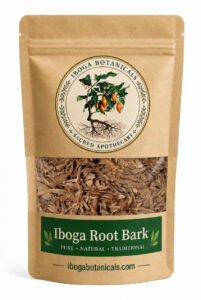
In traditional Bwiti practices, the inner root bark of the iboga plant is utilized in two primary ways. First, small doses are consumed during long hunts or community gatherings. As a result, the botanical material acts as a stimulant to suppress hunger, sharpen focus, and reduce fatigue.
Second, and most importantly, large doses are administered during sacred rite-of-passage initiation ceremonies. Consequently, these initiations mark a profound transition into adulthood and deeper spiritual awakening.
Key Elements of the Sacred Ceremony:
-
- The Oneiric State: The root bark induces a deep, dream-like state. Thus, individuals can look inward to process personal history and confront suppressed memories.
- Ancestral Connection: Initiates use the experience to seek spiritual guidance. In short, it bridges the gap between the physical world and ancestral wisdom.
- Community Healing: Ceremonies are intensely communal. Therefore, the healing of one individual is seen as a restoration of balance for the entire village.
🔬 Bridges to Science and Modern Research
Meanwhile, the global scientific community has taken a deep interest in the phytochemistry of Tabernanthe iboga. Under laboratory analysis, the root bark reveals a complex profile of over 12 distinct indole alkaloids, most notably ibogaine.
Currently, academic and scientific institutions are researching these compounds to understand their mechanisms and legal definitions within modern science:
-
- Chemical Mechanism Research: Academic studies focus on how indole alkaloids interact with various neurotransmitter receptors in laboratory settings to map out neurochemical pathways.
- Neurological Health Models: Scientists explore the theoretical impacts of these alkaloids on neuroplasticity. For instance, basic research models investigate the expression of neurotrophic factors in cellular structures.
- Ethnobotanical Context: The introspective states documented in anthropological records of Bwiti ceremonies serve as a subject of interest for cultural historians and qualitative researchers exploring traditional healing concepts.
⚠️ Important Safety and Global Compliance
However, despite historical interests and cultural practices, Tabernanthe iboga presents serious physiological risks that necessitate absolute restriction outside of formalized clinical trials.
-
- Cardiovascular Risks: Ingestion of active iboga alkaloids can induce severe cardiotoxicity. Specifically, medical data shows a profound risk of prolonging the QT interval, which can cause severe cardiac arrhythmias, cardiac arrest, or fatal events.
- Regulatory Restrictions: Because of these heavy safety hazards, the plant is highly restricted. Hence, many global jurisdictions classify it or its isolated alkaloids as controlled substances, making unauthorized possession or distribution illegal.
- Strict Research Intent: Therefore, specialized ethnobotanical platforms supply these items strictly for laboratory analysis, botanical classification, and herbarium references. They are not intended, approved, or safe for human consumption.
🌱 Honoring the Tradition Through Sustainable Sourcing
In conclusion, as global interest in ethnobotanical research grows, the protection of the Central African rainforest becomes critical. True Tabernanthe iboga is a slow-growing shrub that faces massive ecological pressure from poaching and wild over-harvesting.
Fortunately, ethical sourcing models provide a path forward. By partnering directly with generational farming families in Cameroon and respecting regional laws, sustainable practices help ensure that the forest is continually replanted. Ultimately, supporting sustainable, lab-certified cultivation ensures that the profound cultural heritage of the Bwiti tradition is documented and preserved for generations to come.