Introduction
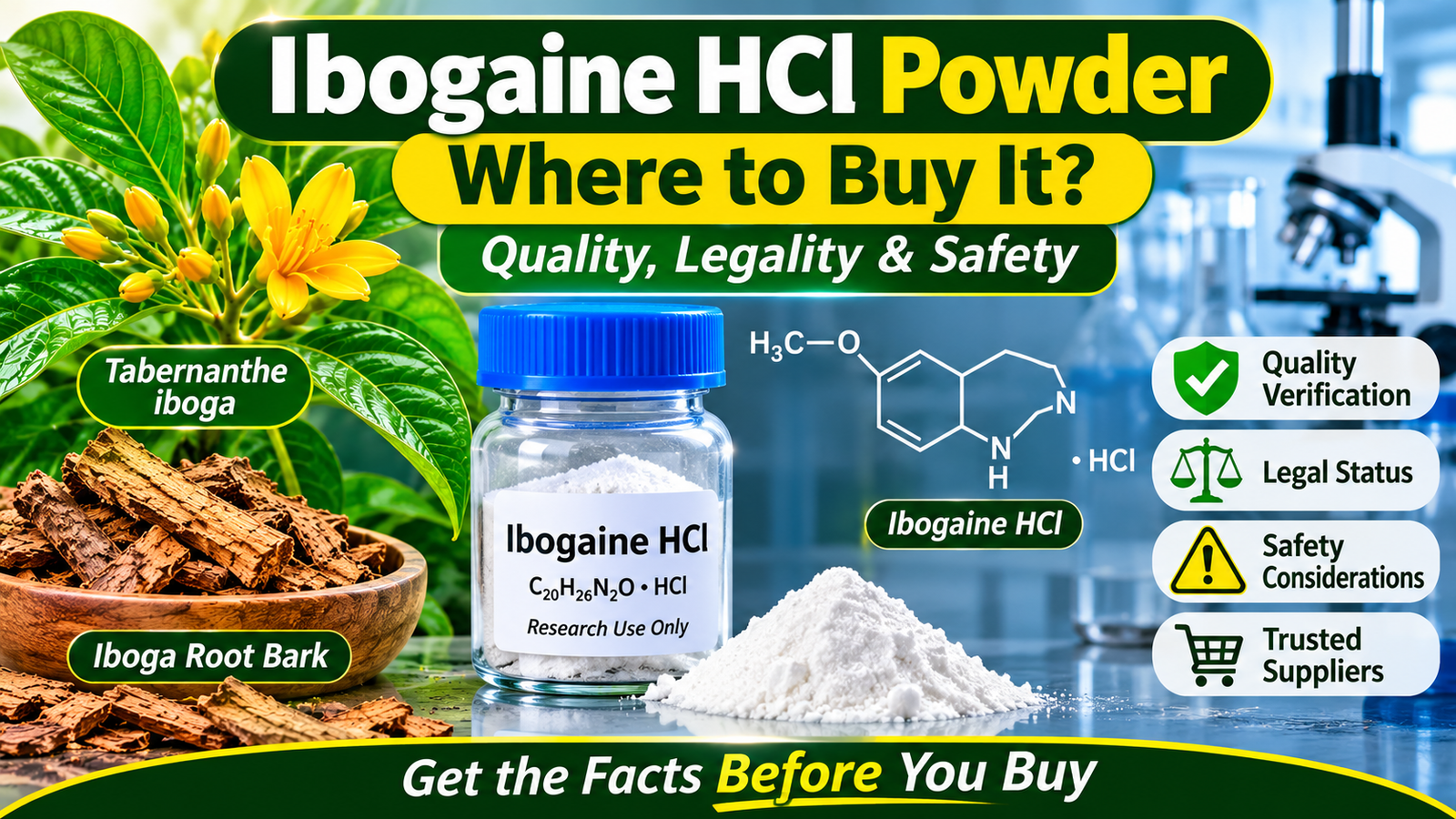
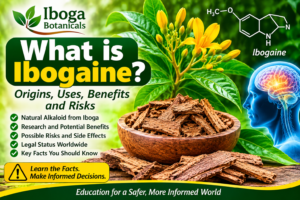
Ibogaine HCl powder has attracted growing attention among people researching ibogaine, its chemical properties, and its potential applications in neuroscience and addiction research.
Ibogaine hydrochloride, commonly abbreviated as ibogaine HCl, is a salt form of ibogaine. It is associated with scientific investigations into the compound’s neurological activity and its potential relationship with substance-use disorders.
Unlike whole iboga root bark, which contains a mixture of naturally occurring botanical compounds, ibogaine HCl is a more chemically defined preparation.
However, questions about where to buy ibogaine HCl powder involve important considerations beyond product availability. These include legal restrictions, chemical identity, laboratory verification, supplier accountability, and significant medical risks.
This article provides an educational overview of ibogaine HCl powder, explains what prospective researchers should understand about product quality and regulation, and discusses why consumer safety must remain a priority.
1. What Is Ibogaine HCl Powder?
Ibogaine hydrochloride is a salt form of ibogaine, a naturally occurring psychoactive alkaloid primarily associated with the African plant Tabernanthe iboga.
The hydrochloride designation refers to the chemical form created when ibogaine is combined with hydrochloric acid to produce a salt.
Ibogaine HCl is different from whole iboga root bark and crude iboga extracts.
Understanding the different forms
| Form | Description |
|---|---|
| Iboga root bark | Botanical material containing multiple naturally occurring alkaloids |
| Iboga extract | Concentrated botanical preparation with variable composition |
| Ibogaine HCl | A more chemically defined hydrochloride salt of ibogaine |
| Noribogaine | An active metabolite formed when the body processes ibogaine |
The distinction matters because research involving purified ibogaine cannot automatically be applied to whole-plant preparations.
2. Where Does Ibogaine HCl Powder Come From?
Ibogaine is naturally associated with Tabernanthe iboga, a shrub native to Central Africa.
The plant has a long cultural history, particularly in Gabon, where it is associated with traditional Bwiti practices.
The chemical compound can be isolated from botanical material or produced through chemical synthesis.
Ibogaine hydrochloride used in scientific investigations must have its identity, purity, and chemical characteristics established through appropriate analytical testing.
Its botanical origins do not guarantee that a commercial powder is authentic, pure, or safe.
3. Where to Buy Ibogaine HCl Powder Online?
One of the most common questions among people researching ibogaine is where to find ibogaine HCl powder.
However, ibogaine is a potent psychoactive substance associated with potentially fatal cardiovascular complications. It is not an ordinary botanical supplement, and online availability does not establish that a product is lawful or suitable for human use.
This article does not recommend retail vendors or provide purchasing instructions for ibogaine HCl powder.
For legitimate scientific research, access should be handled through appropriate institutional and regulatory channels.
Important considerations include:
Authorized research institutions
Universities, pharmaceutical research organizations, and appropriately authorized laboratories may investigate ibogaine under applicable research and controlled-substance requirements.
Any acquisition must follow relevant legal, ethical, and institutional procedures.
Regulatory authorization
Before any research-related acquisition, organizations should establish whether they require:
-
Controlled-substance authorization.
-
Import or export permits.
-
Research approvals.
-
Institutional safety oversight.
-
Appropriate chemical storage and handling procedures.
Independent laboratory verification
Research organizations should require appropriate analytical documentation establishing the identity and composition of a chemical material.
This is particularly important because product descriptions and supplier claims are not substitutes for independent laboratory evidence.
4. How to Evaluate Ibogaine HCl Product Quality
Chemical quality is an important subject in pharmaceutical and analytical research.
A product advertised as ibogaine HCl should not automatically be assumed to contain the stated compound or concentration.
For legitimate laboratory research, relevant quality documentation includes:
Certificate of Analysis (CoA)
A Certificate of Analysis documents analytical findings for a particular product batch.
Depending on the research requirements, it may contain:
-
Chemical identity.
-
Assay results.
-
Purity measurements.
-
Batch identification.
-
Testing methods.
-
Analytical laboratory information.
A certificate should be independently verifiable and correspond to the actual batch being evaluated.
Analytical testing
Specialized laboratories use analytical techniques to characterize chemical substances.
Common methods include:
-
High-performance liquid chromatography (HPLC).
-
Liquid chromatography–mass spectrometry (LC-MS).
-
Nuclear magnetic resonance spectroscopy (NMR).
These techniques can help establish chemical identity and characterize impurities.
However, even a laboratory-confirmed purity result does not establish that ibogaine is safe for human consumption.
Supplier accountability
For institutional research, documentation should also establish the supplier’s legal authorization, traceability, and ability to meet applicable chemical-handling requirements.
5. What Are the Potential Research Applications of Ibogaine HCl?
Ibogaine has attracted scientific attention because of its complex interactions with neurological systems.
Researchers have investigated its potential relevance to several areas.
Addiction research
The most widely discussed research area involves substance-use disorders, particularly opioid dependence.
Some observational studies have reported reductions in withdrawal symptoms and cravings following ibogaine exposure.
However, the available evidence remains insufficient to establish it as an approved or routinely recommended addiction treatment.
Neurological research
Ibogaine interacts with multiple neurological targets, including systems involving serotonin, dopamine, and glutamate.
Researchers continue investigating these interactions to understand its pharmacological properties.
Mental health research
There is also preliminary interest in ibogaine-related research involving PTSD, mood disorders, and other neurological or psychological conditions.
These applications remain investigational and should not be advertised as proven medical benefits.
6. What Are the Risks and Side Effects of Ibogaine HCl?
Understanding ibogaine HCl requires serious consideration of its safety profile.
Although it originates from a natural botanical compound, ibogaine can produce potentially life-threatening adverse effects.
Cardiovascular complications
The most significant concern is cardiac toxicity.
Ibogaine can prolong the QT interval, affecting the electrical activity of the heart.
Potential complications include:
-
Bradycardia.
-
QT interval prolongation.
-
Ventricular arrhythmias.
-
Torsades de pointes.
-
Sudden cardiac arrest.
These complications can be fatal.
Neurological effects
Reported neurological adverse effects include:
-
Tremors.
-
Seizures.
-
Confusion.
-
Impaired coordination.
-
Altered consciousness.
Psychological effects
Ibogaine is psychoactive and may cause significant changes in perception and psychological functioning.
Reported effects include hallucinations, anxiety, disorientation, and agitation.
Medication interactions
Interactions with other medications and substances may increase the risk of adverse reactions.
Ibogaine metabolism also varies between individuals, making its effects difficult to predict.
Important: The US Food and Drug Administration highlighted serious cardiovascular and neurological safety concerns in its October 2026 discussion of ibogaine drug products. These include QTc prolongation, potentially life-threatening arrhythmias, and neurotoxicity concerns.
FDA+1
Ibogaine HCl powder should not be self-administered or used as a substitute for established medical care.
7. Is Ibogaine HCl Powder Legal?
The legal status of ibogaine varies significantly between countries.
Some jurisdictions prohibit it, while others regulate it as a prescription medicine or subject its supply to special authorization.
For example:
-
United States: Ibogaine is classified as a Schedule I controlled substance under federal law.
PubChem
-
Australia: Importation requires applicable licences and permits.
Office of Drug Control (ODC)
-
Canada: Ibogaine is subject to prescription-drug controls.
-
South Africa: Ibogaine is subject to Schedule 6 medicine controls.
-
Gabon: A regulatory framework introduced in May 2026 subjects iboga-related activities to authorization requirements.
iboga.co
The legal status of the hydrochloride salt may also be affected by regulations covering ibogaine and its derivatives.
Anyone researching the substance should verify the applicable national laws, import requirements, and research permissions before considering any acquisition.
8. Ibogaine HCl Powder vs. Iboga Root Bark
Understanding the difference between purified ibogaine and botanical material is important.
| Feature | Ibogaine HCl Powder | Iboga Root Bark |
|---|---|---|
| Origin | Isolated or synthesized chemical compound | Natural plant material |
| Composition | More chemically defined | Mixture of botanical constituents |
| Chemical profile | Primarily ibogaine hydrochloride | Multiple naturally occurring alkaloids |
| Research | Pharmacological investigations | Botanical and ethnobotanical investigations |
| Consistency | Depends on verified chemical specifications | Naturally variable |
| Safety | Significant cardiovascular and neurological risks | Safety cannot be assumed |
Neither preparation should be considered a safe consumer wellness product.
9. Why Responsible Research and Transparency Matter
As international interest in ibogaine increases, responsible scientific communication becomes increasingly important.
Businesses, researchers, and educational organizations should avoid unsupported claims about the compound.
Responsible communication should include:
Scientific accuracy: Distinguish preliminary research from established medical evidence.
Product transparency: Avoid unsupported claims about chemical identity and purity.
Legal compliance: Respect applicable national and international regulations.
Consumer protection: Communicate significant health risks clearly.
African botanical heritage: Recognize the cultural and ecological importance of the iboga plant in Central Africa.
These principles help establish a more responsible understanding of ibogaine and its place in modern scientific research.
Conclusion: Understanding Ibogaine HCl Powder Before Seeking Access
Ibogaine HCl powder is a chemically defined form of ibogaine that has attracted attention in pharmacological and addiction-related research.
Its scientific significance comes from its complex neurological activity and the possibility of future therapeutic investigation.
However, serious cardiovascular and neurological risks remain major limitations.
For people asking where to buy ibogaine HCl powder, the most important considerations are legal authorization, legitimate research oversight, verified chemical identity, and appropriate safety procedures.
Online availability should never be confused with product authenticity, regulatory approval, or medical safety.
At Iboga Botanicals, educational information about ibogaine should promote scientific understanding, responsible awareness, and respect for the African botanical heritage associated with Tabernanthe iboga.
Frequently Asked Questions (FAQs)
1. What is ibogaine HCl powder?
Ibogaine HCl powder is the hydrochloride salt form of ibogaine, a naturally occurring psychoactive alkaloid associated with the African iboga plant.
2. Where does ibogaine HCl come from?
Ibogaine is naturally found in Tabernanthe iboga. The hydrochloride form can be produced through chemical processing or synthesis.
3. Where can researchers obtain ibogaine HCl?
Legitimate research organizations must use legally authorized institutional and regulatory channels. Availability depends on the applicable controlled-substance, research, and import regulations.
4. Is ibogaine HCl the same as iboga root bark?
No. Iboga root bark contains multiple natural compounds, while ibogaine HCl is a more chemically defined form of one particular alkaloid.
5. Is ibogaine HCl powder pure ibogaine?
Not necessarily. Chemical identity and purity must be established through appropriate independent laboratory testing.
6. What is a Certificate of Analysis?
A Certificate of Analysis is a laboratory document reporting analytical findings for a particular product batch, including relevant identity and purity measurements.
7. What is ibogaine HCl used for in research?
Researchers investigate its neurological and pharmacological properties, particularly its potential relationship with substance-use disorders.
8. Is ibogaine HCl approved for addiction treatment?
It is not an established, routinely approved addiction treatment. Clinical research remains limited, and significant safety concerns exist.
9. What are the risks of ibogaine HCl?
Potential risks include QT prolongation, dangerous cardiac arrhythmias, seizures, neurological disturbances, and sudden cardiac arrest.
10. Is ibogaine HCl legal internationally?
No single legal classification applies worldwide. Regulations vary by country and may cover the substance, its salts, imports, research, and commercial supply.
Scientific References and Further Reading
1. US Food and Drug Administration (2026): FDA Seeks Public Input to Support Ibogaine Research.
https://www.fda.gov/news-events/press-announcements/fda-seeks-public-input-support-ibogaine-research
2. National Institute for Public Health and the Environment (RIVM, 2024): Risk Assessment of Herbal Preparations Containing Tabernanthe iboga.
https://www.rivm.nl/publicaties/risk-assessment-of-herbal-preparations-containing-tabernanthe-iboga
3. PubChem: Ibogaine chemical information and regulatory classification.
https://pubchem.ncbi.nlm.nih.gov/compound/197060
4. International Narcotics Control and Police Research: INTERPOL report on illicit trafficking of natural psychotropic substances, including iboga.
https://www.interpol.int/en/content/download/20350/file/Illicit%20trafficking%20of%20natural%20psychotropics.pdf
5. ICEERS: Basic Information on Iboga, including botanical background and legal considerations.
https://www.iceers.org/en/basic-info/iboga-basic-info/
[…] It does not provide a dosage recommendation or instructions for consuming iboga powder. Iboga and ibogaine can cause serious and potentially fatal adverse effects. Do not attempt to calculate or determine a […]