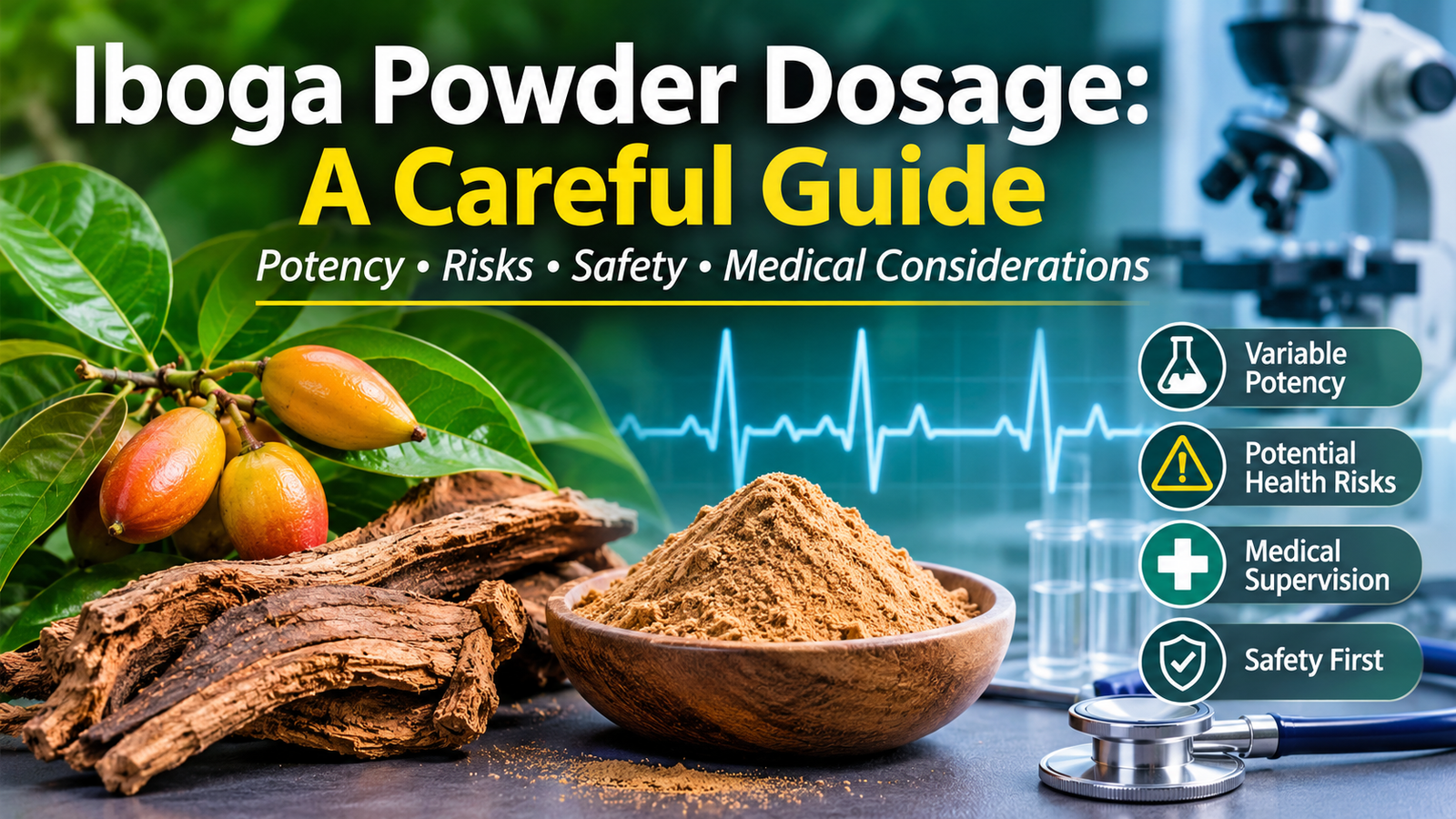
Iboga Powder Dosage: A Careful Guide to Safety, Potency, and Medical Considerations
Iboga powder has attracted attention because of its historical significance in Central African traditions and growing scientific interest in the plant’s naturally occurring alkaloids. However, questions about iboga powder dosage require particular care. Unlike many conventional botanical products, iboga contains powerful psychoactive compounds that can affect the nervous system and cardiovascular system.
One of the most important facts to understand is that there is no universally established safe dosage for iboga powder. Its alkaloid concentration can vary considerably depending on the plant material, preparation, and product quality. Furthermore, the effects of iboga-related compounds can differ significantly between individuals.
This guide examines the factors that influence iboga powder potency, explains the risks associated with its use, and discusses why medical assessment and professional oversight are essential.
Important safety notice: This article is for educational purposes only. It does not provide a dosage recommendation or instructions for consuming iboga powder. Iboga and ibogaine can cause serious and potentially fatal adverse effects. Do not attempt to calculate or determine a personal dose using online information, product labels, or measurements of plant powder.
1. What Is Iboga Powder?
Iboga powder is generally produced from processed plant material associated with Tabernanthe iboga, an evergreen shrub native to Central and West Africa. The plant has a long history of traditional and ceremonial significance, particularly in communities in Gabon and surrounding regions.
The root bark is especially notable because it contains several naturally occurring alkaloids, including:
- Ibogaine: A psychoactive alkaloid that has received attention in addiction-related research.
- Ibogaine-related alkaloids: Other naturally occurring compounds that contribute to the plant’s complex chemical profile.
- Voacangine: An indole alkaloid found in several plant species, including Tabernanthe iboga.
- Other minor alkaloids: Compounds whose concentrations may vary between samples.
The chemical composition of whole-plant powder is not necessarily the same as that of a standardized ibogaine preparation. This distinction is important when discussing potency and safety.
2. Is There a Standard Iboga Powder Dosage?
There is no reliable, universally accepted dosage for iboga powder that can be recommended for general use.
A major reason is that whole-plant powder is a complex botanical material rather than a standardized pharmaceutical product. Two samples that look similar may contain substantially different concentrations of active alkaloids.
Scientific research also does not establish a simple conversion between the weight of iboga powder and the amount of ibogaine it contains.
A measurement of plant powder therefore cannot reliably predict an individual’s exposure to ibogaine or other active compounds.
Research into ibogaine has used carefully controlled preparations and medical protocols. These findings should not be interpreted as instructions for using commercially available root-bark powder.
Why published dosage figures can be misleading
Dosage figures found online may refer to different materials, including:
- Whole iboga root-bark powder.
- Concentrated iboga extracts.
- Standardized ibogaine preparations.
- Pharmaceutical-grade ibogaine hydrochloride.
- Other iboga-derived compounds.
These products are chemically different and should not be treated as interchangeable.
A dosage reported for one preparation cannot safely be applied to another.
3. What Factors Influence Iboga Powder Potency?
Several factors can affect the chemical composition and potential potency of iboga powder.
Botanical identity
Correct identification of the plant species is essential. Different botanical species can have different chemical profiles, and products marketed under similar names may not contain identical plant material.
Plant part
The roots, root bark, stems, and leaves do not necessarily contain the same concentrations or combinations of alkaloids.
Growing conditions
Geographical origin, soil conditions, climate, plant maturity, and growing environment may influence the plant’s chemical composition.
Processing and storage
Harvesting, drying, grinding, processing, and storage conditions can affect botanical quality and stability.
Product testing
A product’s appearance, smell, or claimed origin cannot establish its alkaloid content. Reliable analytical testing is necessary to characterize its composition.
Even when a laboratory identifies the concentration of certain compounds, that information does not establish a safe amount for human consumption.
4. Understanding the Health Risks of Iboga
The risks associated with iboga are an essential part of any responsible discussion about dosage.
Ibogaine, one of the plant’s principal psychoactive alkaloids, can affect the electrical activity of the heart. One particularly serious concern is QT interval prolongation, an alteration in the heart’s electrical recovery cycle.
This can contribute to dangerous ventricular arrhythmias, including torsades de pointes, which can result in cardiac arrest or sudden death.
Other reported adverse effects include:
- Nausea and vomiting.
- Dizziness and impaired coordination.
- Tremors and muscle weakness.
- Confusion and altered perception.
- Seizures and other neurological complications.
- Changes in heart rate and blood pressure.
- Persistent cardiac or psychiatric complications.
Importantly, serious cardiac events have been reported in people without a previously diagnosed heart condition. A person’s subjective feeling of being well does not establish that iboga exposure is safe.
5. Why Medical Screening Is Important
Ibogaine-related risks cannot be assessed reliably through body weight or a simple dosage calculation.
Medical screening is important because individual health conditions, medications, and differences in drug metabolism may influence the likelihood of adverse reactions.
A qualified medical professional may consider:
Cardiovascular assessment: An electrocardiogram (ECG) can help identify electrical abnormalities, including QT interval prolongation.
Medical history: Existing heart conditions, previous fainting episodes, seizures, and other relevant health problems may affect risk.
Medication review: Some medications can also prolong the QT interval or interact with ibogaine-related compounds.
Laboratory assessment: Electrolyte abnormalities and certain liver or kidney problems may influence medical risk.
Metabolic differences: The CYP2D6 enzyme plays an important role in ibogaine metabolism. Differences in this enzyme’s activity can influence how individuals process the compound.
These assessments are not a guarantee of safety. They are part of a broader medical risk evaluation.
6. Can Iboga Powder Be Used Without Medical Supervision?
Self-administration of iboga powder is not recommended.
The concentration of active compounds in botanical powder may be uncertain, and there is no established home-use protocol that reliably prevents serious complications.
Medical supervision is particularly important because some adverse effects can develop or persist after the initial exposure. Cardiac monitoring may be necessary to identify changes that are not immediately noticeable to the individual.
Online dosage calculators, personal testimonials, and informal recommendations cannot replace clinical assessment.
People considering ibogaine-related treatment should speak with qualified healthcare professionals and discuss established, evidence-based treatment options.
7. Iboga Powder vs. Ibogaine HCl: Understanding the Difference
Iboga powder and ibogaine hydrochloride are not the same product.
| Feature | Iboga powder | Ibogaine HCl |
|---|---|---|
| Source | Processed botanical material | Isolated ibogaine salt |
| Composition | Multiple plant compounds | Primarily ibogaine hydrochloride |
| Alkaloid concentration | May vary substantially | Can be characterized analytically |
| Standardization | Not necessarily standardized | Depends on manufacturing and quality controls |
| Research use | Botanical and phytochemical research | Controlled chemical and pharmacological research |
Ibogaine HCl may offer more precise chemical characterization than whole-plant powder, but this does not make it inherently safe. It retains significant cardiovascular and neurological risks.
Neither product should be considered suitable for unsupervised consumption.
8. What Does Scientific Research Say About Ibogaine Dosage?
Research into ibogaine is ongoing, particularly in relation to substance use disorders and other mental health conditions.
Some observational studies have reported changes in withdrawal symptoms, cravings, and substance-use patterns following ibogaine exposure. However, these findings do not establish a universally safe or effective treatment protocol.
A 2021 systematic review of adverse events in humans identified serious complications associated with ibogaine and noribogaine. Cardiac effects, particularly QTc prolongation, were among the most frequently reported concerns. The researchers emphasized the need for controlled studies using standardized products.
More recent research continues to examine cardiovascular safety, metabolism, and the development of appropriate clinical trial protocols.
In October 2026, the US Food and Drug Administration announced a request for public input on the design and safety considerations of early-phase ibogaine clinical trials. The issues under consideration include dose selection, safety monitoring, participant eligibility, and medical oversight.
This is an important development in scientific research, but it should not be interpreted as approval of ibogaine for general medical use or as evidence that a safe self-administration dosage has been established.
9. How Should Iboga Powder Quality Be Evaluated?
For legitimate botanical, analytical, or institutional research, product characterization is an important quality consideration.
Relevant documentation may include:
- Verified botanical identification.
- Clear identification of the plant part used.
- Information about geographical origin and processing.
- Laboratory testing by a qualified analytical laboratory.
- Screening for contaminants, including heavy metals, microbial contamination, and residual processing chemicals where relevant.
- Documentation of the analytical methods and test results.
A certificate of analysis can provide useful information about a sample’s chemical composition. However, it should not be interpreted as proof that the material is safe for human consumption.
Product quality, chemical identity, and medical safety are separate considerations.
10. What Should Someone Do If They Experience an Adverse Reaction?
Suspected iboga or ibogaine toxicity should be treated seriously.
Seek emergency medical assistance immediately if someone experiences:
- Fainting or loss of consciousness.
- Chest pain or unusual heart palpitations.
- Difficulty breathing.
- Seizures.
- Severe confusion or inability to remain alert.
- Collapse or sudden weakness.
Do not wait for symptoms to resolve on their own. Tell emergency medical personnel what substance may have been taken, when exposure occurred, and whether other medications or substances were involved.
Prompt medical assessment is important because serious complications may require urgent treatment.
Conclusion: A Responsible Approach to Iboga Powder Dosage
Understanding iboga powder dosage begins with recognizing that there is no universally established safe amount for general consumption.
The chemical composition of botanical powder can vary, and the relationship between powder weight and active alkaloid exposure cannot be reliably predicted without appropriate analytical characterization. Even standardized ibogaine preparations carry potentially serious cardiovascular and neurological risks.
For these reasons, online dosage recommendations and personal accounts should not be used to guide self-administration.
Responsible education should focus on botanical identity, chemical composition, scientific evidence, product characterization, legal considerations, and medical safety.
As research continues, further clinical studies may help clarify the therapeutic potential and risks of ibogaine. Until stronger evidence and appropriate regulatory pathways are established, medical caution and professional oversight remain essential.
Frequently Asked Questions
1. Is there a recommended iboga powder dosage?
No universally accepted safe dosage has been established for iboga powder. Its chemical composition and alkaloid concentration can vary, making general dosage recommendations unreliable.
2. Is iboga powder the same as ibogaine?
No. Iboga powder is botanical material containing multiple naturally occurring compounds. Ibogaine is a specific psychoactive alkaloid found in the plant.
3. Does iboga powder contain ibogaine?
Iboga root-bark powder can contain ibogaine, but the concentration varies. Its presence and quantity should be established through appropriate laboratory analysis rather than visual inspection or product descriptions.
4. Can iboga powder cause heart problems?
Yes. Ibogaine can prolong the QT interval and contribute to dangerous heart rhythm disturbances. Serious and potentially fatal cardiac complications have been documented.
5. Is ibogaine HCl safer than iboga powder?
Not necessarily. Ibogaine HCl is a more chemically defined preparation, but it still carries significant risks. Greater chemical consistency does not mean that a substance is safe for unsupervised use.
6. Can iboga powder be used for addiction treatment?
Ibogaine is being investigated for possible applications in substance use disorders. However, research remains limited, and ibogaine is not an established or universally approved addiction treatment.
7. How can the quality of iboga powder be verified?
Quality assessment may involve botanical identification, documented sourcing, and laboratory analysis of alkaloids and contaminants. These tests characterize the material but do not establish a safe human dose.
8. Why is medical supervision important?
Medical supervision is important because ibogaine can cause serious cardiac and neurological complications. Qualified professionals can assess health risks, review medications, and provide appropriate monitoring and emergency care.
References
- Ona, G. et al. (2021). The adverse events of ibogaine in humans: an updated systematic review of the literature (2015–2020). PubMed. https://pubmed.ncbi.nlm.nih.gov/34406452/
- Brunt, T. M. (2026). Rare but relevant: Ibogaine and cardiovascular complications—prolonged QT interval and ventricular arrhythmias. Addiction. https://doi.org/10.1111/add.70319
- US Food and Drug Administration (2026). FDA Seeks Public Input to Support Ibogaine Research. https://www.fda.gov/news-events/press-announcements/fda-seeks-public-input-support-ibogaine-research
- National Institute for Public Health and the Envir