
Introduction
What is ibogaine, and why has this naturally occurring compound attracted increasing scientific and international attention?
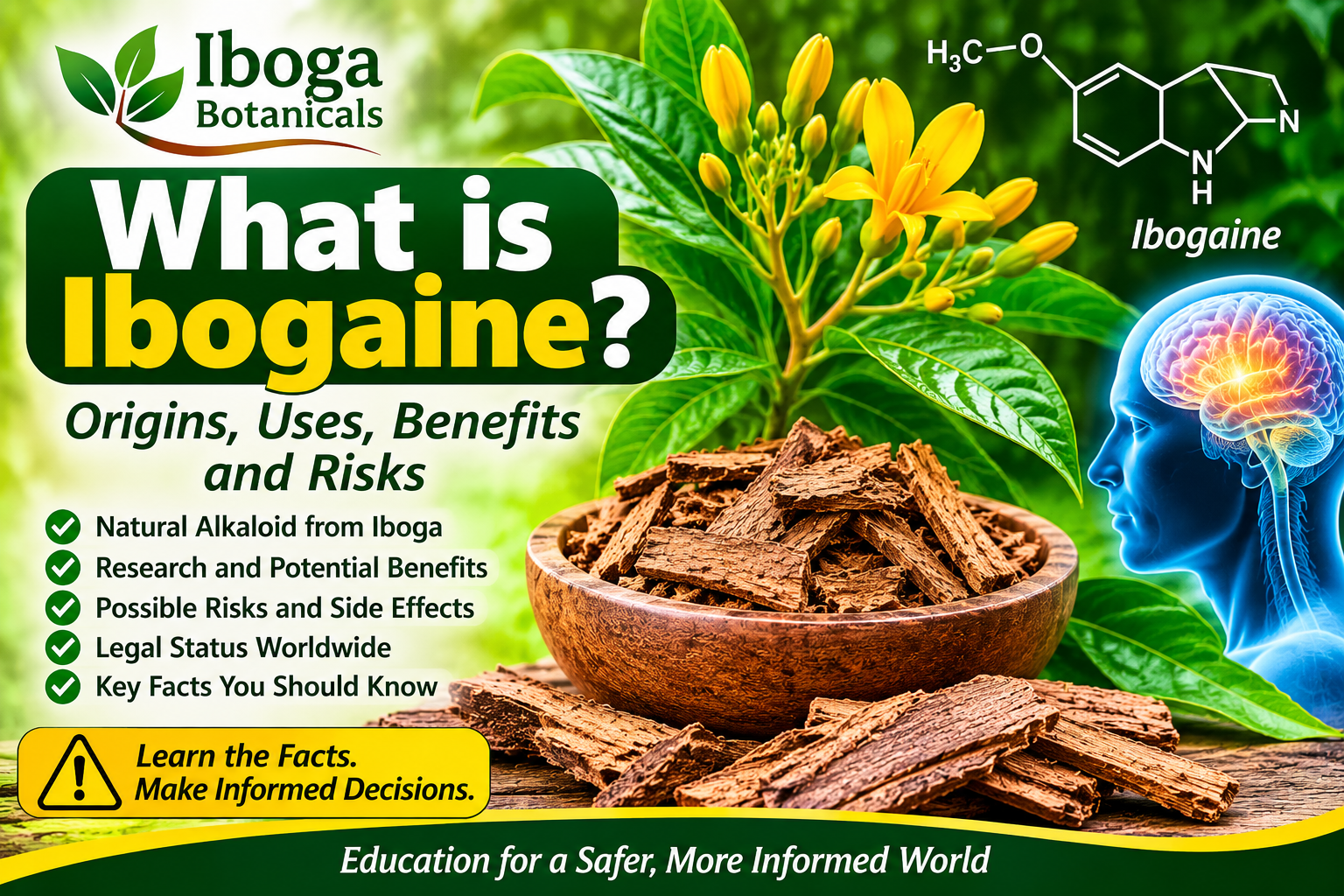
Ibogaine is a naturally occurring psychoactive alkaloid found primarily in Tabernanthe iboga, a shrub native to Central Africa. The plant has a long history of traditional and cultural significance, particularly in Gabon and neighboring regions, where it has been associated with spiritual ceremonies and traditional practices.
In recent years, ibogaine has become a subject of scientific investigation because of its complex effects on the brain and nervous system. Researchers have shown particular interest in its potential relationship with substance-use disorders, including opioid dependence.
Despite this growing interest, ibogaine remains a controversial substance. Although preliminary research has reported potentially interesting findings, serious health risks, especially cardiovascular complications, remain major concerns.
Understanding ibogaine requires examining its botanical origins, chemical properties, traditional background, potential applications, scientific evidence, and safety considerations.
This guide explores these subjects to provide a balanced and educational overview of ibogaine.
1. What Is Ibogaine?
Ibogaine is a naturally occurring indole alkaloid found in the root bark of Tabernanthe iboga, an evergreen shrub native to Central and West Africa.
It belongs to a broader group of plant-derived alkaloids that interact with the human nervous system.
Unlike ordinary botanical supplements, ibogaine has significant psychoactive properties. It can influence several neurotransmitter systems involved in perception, mood, cognition, and neurological activity.
The compound has attracted research interest because of its unusual pharmacological characteristics.
Where does ibogaine come from?
Ibogaine originates primarily from the iboga plant, scientifically identified as Tabernanthe iboga.
The plant grows naturally in tropical regions of Central Africa, particularly Gabon, Cameroon, and neighboring countries.
Its root bark contains several naturally occurring alkaloids, including:
-
Ibogaline
-
Tabernanthine
-
Voacangine
Ibogaine is the best-known of these compounds because of its psychoactive properties and its role in addiction-related research.
Is ibogaine the same as iboga?
No. Iboga and ibogaine are closely related but are not interchangeable terms.
Iboga refers to the entire botanical plant, while ibogaine refers to one specific chemical compound naturally present in the plant.
This distinction is important because research involving purified ibogaine cannot automatically be applied to every preparation made from iboga root bark.
2. The History and Traditional Origins of Ibogaine
To understand ibogaine, it is important to explore the history of the plant from which it originates.
Tabernanthe iboga has been used for generations by communities in Central Africa. It is particularly associated with the Bwiti spiritual tradition in Gabon, where iboga has played an important role in initiation ceremonies, spiritual practices, and cultural identity.
Traditional uses of the iboga plant
Historically, iboga has been used in different cultural contexts, including:
-
Spiritual and ceremonial practices.
-
Traditional rites of passage.
-
Cultural activities involving ancestral beliefs.
-
Traditional knowledge systems concerning medicinal plants.
These practices have deep cultural meaning and should be understood within their specific African contexts.
Discovery of ibogaine
Ibogaine was isolated from the iboga plant in the early twentieth century. Its psychoactive properties subsequently attracted attention from researchers interested in plant-derived alkaloids and their effects on the nervous system.
During the twentieth century, interest in ibogaine expanded beyond its traditional African context, particularly as researchers began investigating its possible relationship with substance dependence.
Today, ibogaine remains an important subject of ethnobotanical, pharmacological, and clinical research.
3. How Does Ibogaine Work in the Brain?
One reason ibogaine has attracted scientific attention is its complex interaction with the central nervous system.
Unlike substances that primarily affect one neurotransmitter pathway, ibogaine interacts with several neurological targets.
Neurotransmitters are chemical messengers that allow nerve cells to communicate with one another. They influence processes such as mood, motivation, memory, reward, and perception.
Research suggests that ibogaine influences several systems, including:
Dopamine pathways
Dopamine is involved in motivation, reward, learning, and reinforcement.
Researchers are investigating how ibogaine’s interactions with dopamine-related pathways may contribute to its reported effects on substance-use behaviours.
Serotonin pathways
Serotonin contributes to mood regulation, sleep, perception, and several other neurological processes.
Ibogaine interacts with certain serotonin receptors, which may contribute to its psychoactive properties.
NMDA receptors
NMDA receptors are involved in glutamate signalling, learning, memory, and neuronal communication.
Ibogaine has been shown to interact with NMDA receptor systems, although the precise significance of this interaction in humans remains under investigation.
Other neurological targets
Ibogaine also interacts with additional molecular targets, including sigma receptors and other neurotransmitter-related systems.
Its pharmacological activity is therefore complex, and researchers have not established one definitive mechanism responsible for all its observed effects.
4. What Is Noribogaine?
Noribogaine is an active metabolite produced when the human body processes ibogaine.
After ibogaine is absorbed, liver enzymes help convert it into noribogaine through a metabolic process involving the CYP2D6 enzyme.
Noribogaine is important because it remains pharmacologically active and may contribute to some of the longer-lasting effects associated with ibogaine exposure.
Differences between ibogaine and noribogaine
Although they are chemically related, ibogaine and noribogaine have different pharmacological characteristics.
| Characteristic | Ibogaine | Noribogaine |
|---|---|---|
| Origin | Naturally occurring alkaloid | Metabolite of ibogaine |
| Formation | Found in the iboga plant | Produced through metabolism |
| Activity | Psychoactive | Pharmacologically active |
| Research interest | Neurological and addiction research | Metabolism and neurological effects |
| Safety concerns | Includes cardiac risks | Also associated with cardiac concerns |
The conversion of ibogaine into noribogaine helps explain why its effects and potential risks may continue beyond the initial exposure period.
5. What Are the Potential Benefits of Ibogaine?
The potential benefits of ibogaine are among the main reasons for its growing research profile.
However, it is essential to distinguish between promising preliminary observations and established medical benefits.
Ibogaine and addiction research
The most widely investigated application of ibogaine involves substance-use disorders.
Researchers have examined whether ibogaine may influence withdrawal symptoms, cravings, and neurological processes associated with dependence.
Some observational studies have reported reductions in withdrawal symptoms and cravings among people exposed to ibogaine.
A 2026 cardiovascular review also discusses evidence from observational studies and limited clinical trials involving opioid and cocaine dependence. However, the available evidence is not sufficient to establish ibogaine as an effective, approved treatment.
Research involving opioid dependence
Opioid dependence is one of the most frequently discussed areas of ibogaine research.
Researchers are interested in its potential influence on neurological systems involved in opioid-related dependence and withdrawal.
Nevertheless, small studies and observational findings cannot establish long-term effectiveness, and ibogaine carries potentially fatal risks.
Established treatments for opioid use disorder, including buprenorphine and methadone where clinically appropriate, have a substantially stronger evidence base.
Interest in mental health research
Ibogaine has also attracted preliminary research interest in conditions such as:
-
Post-traumatic stress disorder (PTSD).
-
Depression.
-
Anxiety-related symptoms.
-
Traumatic brain injury.
However, research in these areas remains limited. Ibogaine should not be promoted as a proven treatment for these conditions.
6. What Are the Effects of Ibogaine?
Ibogaine can produce substantial changes in physical sensations, perception, consciousness, and neurological functioning.
Its effects are not identical for everyone and can vary according to individual physiology, metabolism, health conditions, and other substances involved.
Reported effects include:
Changes in perception: Some individuals experience unusual visual sensations, dreamlike imagery, or altered awareness.
Psychological effects: Experiences may involve intense emotions, confusion, anxiety, or disorientation.
Physical effects: Nausea, vomiting, dizziness, tremors, and impaired coordination have been reported.
Neurological effects: Ibogaine can affect normal neurological functioning and has been associated with seizures and other serious complications.
The duration and intensity of effects are variable. Because ibogaine and noribogaine can remain active in the body, adverse effects may persist beyond the initial period of exposure.
These effects should not be interpreted as evidence that ibogaine is producing a beneficial therapeutic response.
7. What Are the Risks and Side Effects of Ibogaine?
Although ibogaine is derived from a natural plant, it can cause serious health complications.
Its cardiovascular safety profile is particularly concerning.
Cardiac arrhythmias
One of the most important risks associated with ibogaine is QT interval prolongation.
The QT interval represents the time required for the heart’s electrical system to recover between beats.
When this interval becomes excessively prolonged, dangerous heart rhythm disturbances can occur.
Potential complications include:
-
Bradycardia.
-
QT interval prolongation.
-
Ventricular arrhythmias.
-
Torsades de pointes.
-
Sudden cardiac arrest.
These complications can be fatal.
Neurological side effects
Reported neurological adverse effects include:
-
Tremors.
-
Seizures.
-
Confusion.
-
Impaired coordination.
-
Changes in consciousness.
Psychological side effects
Because ibogaine is psychoactive, it may cause significant psychological disturbances, including hallucinations, agitation, disorientation, and, in some cases, psychotic symptoms.
Gastrointestinal side effects
Nausea and vomiting are among the commonly reported adverse effects.
Medication interactions
Ibogaine can interact with medications and other substances, potentially increasing the risk of cardiac and neurological complications.
Its metabolism also varies between individuals, partly because of genetic differences in CYP2D6 enzyme activity.
A 2026 review in Addiction highlights the importance of these metabolic differences and the potentially serious cardiac risks.
Important safety warning: The Dutch National Institute for Public Health and the Environment (RIVM) advises consumers not to use herbal preparations containing Tabernanthe iboga. Its assessment identifies potentially fatal heart rhythm disturbances and other serious adverse effects.
RIVM+1
Ibogaine should not be self-administered or used as a substitute for established medical treatment.
8. Is Ibogaine an Approved Addiction Treatment?
Ibogaine is not an established, routinely approved treatment for substance-use disorders.
Although scientific interest continues to grow, the evidence remains limited by small studies, observational research, inconsistent product preparations, and significant safety concerns.
A 2026 review of three decades of clinical research found that most positive findings came from uncontrolled or retrospective studies. It concluded that the available evidence is insufficient to support routine clinical use.
DOI
People experiencing addiction should consult qualified healthcare professionals about evidence-based treatment options.
For opioid dependence, these may include:
-
Buprenorphine.
-
Methadone.
-
Naltrexone where appropriate.
-
Psychological support.
-
Structured addiction treatment and recovery services.
These treatments have established clinical evidence and should be considered through professional medical assessment.
9. Is Ibogaine Legal?
The legal status of ibogaine differs significantly between countries.
Some jurisdictions classify ibogaine as a controlled substance, while others have different regulatory approaches to the compound and the iboga plant.
It is important to distinguish between the legal status of:
-
The whole iboga plant.
-
Iboga root bark.
-
Iboga extracts.
-
Purified ibogaine.
-
Pharmaceutical or research preparations.
These products may be subject to different legal requirements.
Before purchasing, importing, exporting, or possessing iboga-related products, individuals and businesses should consult the relevant national regulatory authorities.
A product being advertised online does not mean it is legal to import or possess.
10. What Is the Difference Between Iboga and Ibogaine?
Although the terms are frequently used together, they describe different things.
| Feature | Iboga | Ibogaine |
|---|---|---|
| Definition | Botanical plant | Chemical alkaloid |
| Scientific name | Tabernanthe iboga | Ibogaine |
| Composition | Contains multiple plant compounds | One specific compound |
| Origin | Central Africa | Naturally found in iboga |
| Traditional significance | Important in African cultural practices | Known for psychoactive properties |
| Research | Botanical and ethnobotanical studies | Pharmacological and clinical studies |
Understanding this difference is essential when reading scientific publications or evaluating claims about iboga-related products.
Research conducted using purified ibogaine should not automatically be interpreted as evidence about whole-plant preparations.
11. The Future of Ibogaine Research
Scientific interest in ibogaine continues to develop as researchers investigate its pharmacological properties and potential applications.
Several areas may shape future research.
Developing safer alternatives
Researchers are investigating ibogaine-related compounds that may retain some potentially useful pharmacological properties while reducing cardiovascular toxicity.
Improving scientific understanding
More research is needed to understand ibogaine’s neurological mechanisms, metabolism, and interactions with other medications.
Strengthening clinical evidence
Larger, carefully controlled clinical trials are needed to determine whether ibogaine has any clinically meaningful therapeutic applications.
Improving safety standards
Future research must prioritize cardiovascular monitoring, standardized preparations, appropriate medical assessment, and long-term follow-up.
The scientific future of ibogaine will depend not only on its potential applications but also on whether its risks can be adequately understood and addressed.
Conclusion: Understanding What Ibogaine Is and Why It Matters
Ibogaine is a naturally occurring psychoactive alkaloid derived primarily from the African iboga plant, Tabernanthe iboga.
Its traditional botanical origins, complex neurological activity, and potential relationship with addiction research have made it an important subject of international scientific interest.
However, interest should not be confused with proven effectiveness.
Current research remains limited, and potentially fatal cardiovascular complications represent a major concern.
At Iboga Botanicals, educating readers about ibogaine means recognizing its African botanical heritage while presenting scientific findings responsibly and acknowledging the limitations of existing research.
Understanding what ibogaine is requires a balanced perspective that considers its origins, pharmacology, research potential, and significant health risks.
Scientific References and Further Reading
The following sources provide credible scientific and public-health information to support the article:
1. Cherian et al. (2024) – Psychedelic Therapy: A Primer for Primary Care Clinicians—Ibogaine. American Journal of Therapeutics. Read the research on PubMed.
PubMed
2. Ona et al. (2022) – The Adverse Events of Ibogaine in Humans: An Updated Systematic Review of the Literature (2015–2020). Psychopharmacology. Read the systematic review.
PubMed
3. RIVM (2024) – Risk Assessment of Herbal Preparations Containing Tabernanthe iboga. Read the public-health assessment.
RIVM
4. Brunt (2026) – Rare but Relevant: Ibogaine and Cardiovascular Complications—Prolonged QT Interval and Ventricular Arrhythmias. Addiction. Read the cardiovascular review.
PubMed
5. Kervadec et al. (2026) – Thirty Years of Ibogaine Research: A Literature Review on Clinical Perspectives. Journal of Clinical Psychopharmacology. Read the research review



[…] the species has documented botanical and historical chemical records, these do not establish that it has the same ceremonial importance […]