
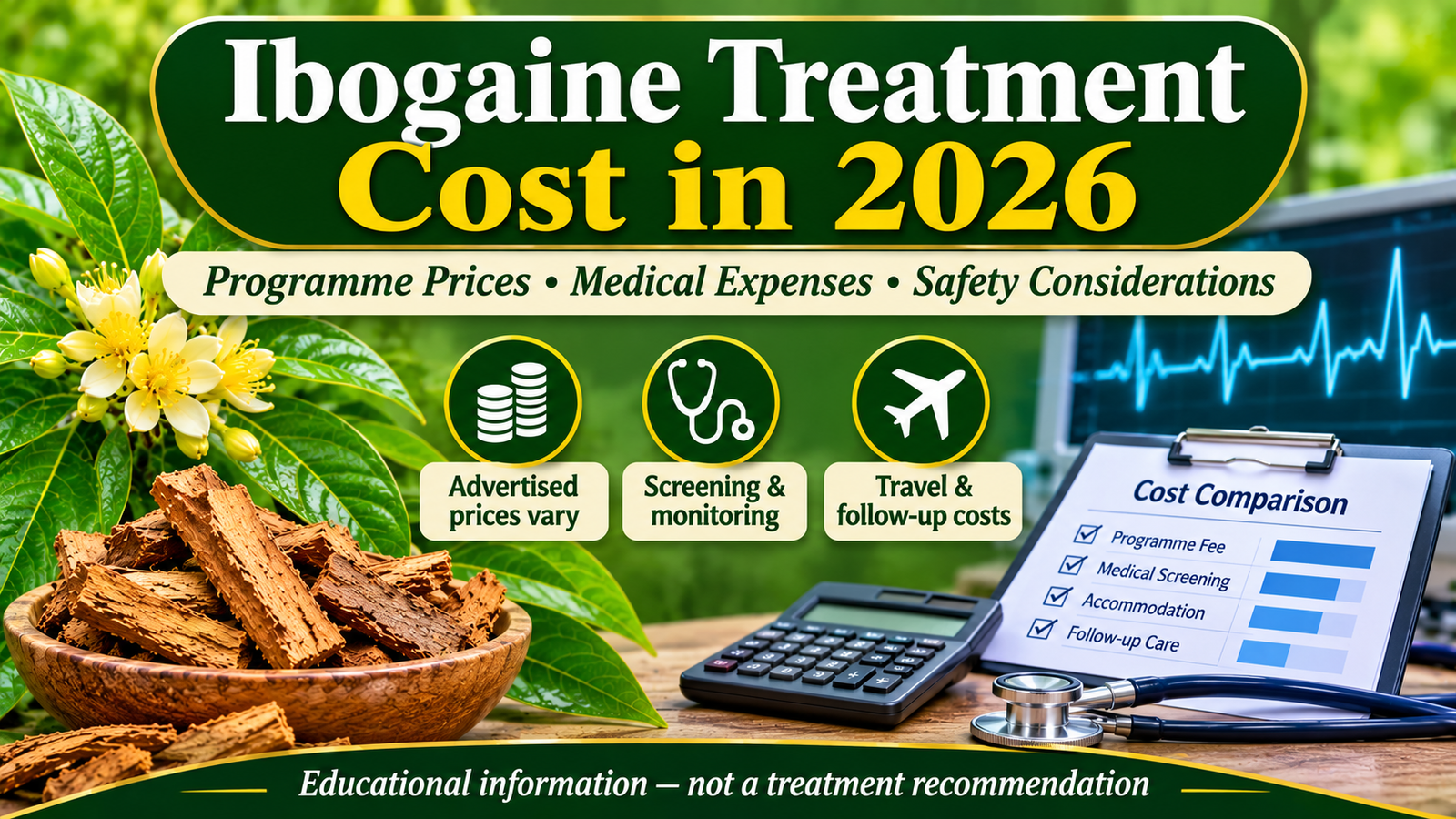
Ibogaine Treatment Cost in 2026: Prices, Medical Expenses, and What to Expect
Introduction
Interest in ibogaine treatment has continued to grow as researchers investigate its potential applications in substance use disorders and other health conditions. For people researching this subject, one of the most common questions is: How much does ibogaine treatment cost in 2026?
The answer depends on several factors, including the country, programme duration, medical staffing, screening requirements, accommodation, and follow-up services.
Some programmes advertise relatively low prices, while others charge tens of thousands of dollars for extended residential care. However, comparing prices alone can be misleading because programmes differ significantly in their medical services and safety arrangements.
Ibogaine is a powerful psychoactive compound associated with potentially life-threatening cardiac complications. It is not an established, universally approved addiction treatment. A higher programme price does not automatically mean better medical care or greater safety.
This guide examines advertised ibogaine treatment costs in 2026, explains the expenses that may be included or excluded, and outlines the safety questions readers should consider before evaluating treatment claims.
Important medical disclaimer: This article is for educational purposes only and does not recommend ibogaine treatment. It does not provide medical advice or instructions for using ibogaine. Anyone experiencing substance dependence should consult a qualified healthcare professional about evidence-based treatment options.
1. How Much Does Ibogaine Treatment Cost in 2026?
Published prices vary considerably depending on the type of programme and the services provided.
A review of advertised programmes available through October 2026 reported:
| Programme category | Indicative advertised cost |
|---|---|
| Shorter iboga retreats | Approximately $2,150–$15,495 |
| Medically staffed clinic programmes | Approximately $4,200–$36,000 |
| Commonly advertised medical programmes | Approximately $7,500–$13,500 |
| Extended residential programmes | Can exceed $25,000 |
These figures are approximate advertised prices in US dollars, not verified costs paid by patients. Some prices may exclude important expenses, and programme availability and pricing can change.
The reported median across 44 programmes was approximately $7,500. For clinic programmes alone, the reported median was approximately $8,500.
These figures provide a market overview, not a recommendation to select a particular programme.
2. Why Does Ibogaine Treatment Cost So Much?
Ibogaine programmes can involve substantially different levels of staffing, accommodation, medical assessment, and monitoring.
Unlike many short outpatient appointments, ibogaine exposure may involve prolonged psychoactive effects and potentially serious cardiovascular complications.
Responsible clinical research and medical oversight can require additional resources.
Several factors influence advertised programme costs.
Programme duration
A short residential programme may cost less than a programme lasting two or three weeks.
Longer programmes may involve additional accommodation, meals, professional staffing, and follow-up appointments.
Medical staffing
Programmes that describe physician involvement, nursing support, cardiac assessment, and emergency arrangements may have higher operating costs.
However, advertising medical staff does not independently establish the quality of care.
Medical screening
Pre-treatment assessment can involve:
- Medical history and physical examination.
- Electrocardiography (ECG).
- Blood tests.
- Electrolyte assessment.
- Medication review.
- Cardiovascular risk evaluation.
These assessments are important because ibogaine can affect the electrical activity of the heart.
Accommodation and additional services
Some programmes include private accommodation, meals, airport transfers, counselling, and integration services.
Others charge separately for these services.
Programme complexity
Some advertised programmes involve additional residential support or medication stabilisation. These arrangements may increase the total cost and require a longer period of professional care.
3. Ibogaine Treatment Costs by Country
Advertised programme prices differ between destinations.
Mexico has a particularly large number of programmes in published price directories. Portugal, Costa Rica, Brazil, and South Africa also appear in listings.
The following figures are indicative advertised prices, not verified medical-quality comparisons.
| Country | Examples of published programme prices |
|---|---|
| Mexico | Approximately $2,650–$36,000 |
| Costa Rica | Approximately $2,500–$4,500 |
| Portugal | Approximately $2,150–$7,370 |
| Brazil | Approximately $3,300–$14,900 |
| South Africa | Approximately $4,200–$5,200 |
Prices reflect different programme lengths, accommodation arrangements, and service descriptions. They should not be interpreted as evidence that one country offers safer or more effective treatment.
Before considering international medical services, people should also investigate local laws, travel requirements, insurance coverage, and access to emergency medical care.
4. What Is Usually Included in an Ibogaine Treatment Package?
One of the most important steps in comparing advertised prices is understanding exactly what the package includes.
Some programmes describe their prices as all-inclusive, while others provide only a basic residential or retreat package.
Potential inclusions include:
Initial consultation: A preliminary discussion of medical history, eligibility, and programme requirements.
Medical screening: Depending on the provider, this may include ECG testing, laboratory investigations, and medical review.
Accommodation: Residential facilities, private rooms, or shared accommodation.
Meals: Food and refreshments during the programme.
Medical personnel: Physician, nursing, or other clinical support, if actually provided.
Monitoring: Appropriate clinical observation and cardiac monitoring where medically indicated.
Aftercare: Follow-up consultations, integration support, or referrals to other healthcare services.
A programme should clearly document which services are included rather than relying on broad marketing terms such as premium care or complete treatment.
5. Additional Expenses to Consider
The advertised programme price may not represent the total amount a person spends.
Additional expenses can include:
| Expense | Why it matters |
|---|---|
| International flights | Travel to and from the programme destination |
| Accommodation before or after treatment | Additional nights may not be included |
| Medical consultations | Independent assessments may involve separate fees |
| Laboratory investigations | Some tests may be billed separately |
| Travel insurance | Coverage for experimental or unapproved treatment may be excluded |
| Companion expenses | A travelling companion may need separate accommodation |
| Follow-up healthcare | Ongoing professional care may involve additional costs |
For international programmes, travel and medical expenses should be evaluated separately from the advertised treatment fee.
Travel insurance policies should be reviewed carefully because experimental or unapproved treatments may be excluded.
6. Why the Cheapest Ibogaine Programme Is Not Necessarily the Best Choice
When comparing advertised prices, it is tempting to assume that the lowest-cost option offers the best value.
However, price does not establish medical safety.
Ibogaine has been associated with serious cardiovascular complications, including QT interval prolongation and dangerous ventricular arrhythmias.
A programme that does not adequately address these risks may expose participants to significant danger, regardless of its advertised price.
Important questions about any proposed clinical programme include:
- Are qualified medical professionals responsible for care?
- Is cardiovascular screening performed?
- Is appropriate ECG monitoring available?
- Is there a documented emergency response plan?
- Is there access to hospital-level care?
- Are medication interactions reviewed?
- Is follow-up care clearly explained?
- Are the programme’s legal and regulatory arrangements transparent?
These questions are more important than accommodation upgrades or promotional offers.
Even when a programme describes itself as medically supervised, its actual credentials, staffing, facilities, and emergency arrangements require independent verification.
7. Understanding the Medical Risks Behind the Cost
The cost of ibogaine-related medical care should be understood in the context of its potential health risks.
Ibogaine can interfere with cardiac electrical activity and prolong the QT interval.
This can increase the risk of potentially fatal arrhythmias, including torsades de pointes.
Other reported complications include:
- Fainting and loss of consciousness.
- Changes in heart rate and blood pressure.
- Nausea and vomiting.
- Confusion and altered perception.
- Seizures and neurological complications.
- Dangerous interactions with certain medications.
Medical assessment may include an ECG, medication review, electrolyte testing, and evaluation of relevant cardiovascular risk factors.
Importantly, screening does not eliminate all risks.
People should not discontinue prescribed medication or change treatment plans without consulting their healthcare professionals.
8. Is Ibogaine Treatment Approved in 2026?
Regulatory status is an important consideration when researching ibogaine treatment costs.
As of 2026, ibogaine is not an FDA-approved treatment for substance use disorders in the United States.
However, research and regulatory discussions have continued.
On October 5, 2026, the US Food and Drug Administration announced a request for public input on the design of early-phase ibogaine clinical trials.
The agency identified several important research considerations, including:
- Participant eligibility.
- Dose selection and escalation.
- Cardiac and neurological safety monitoring.
- Emergency procedures.
- Independent safety oversight.
This development demonstrates continued scientific interest, but it does not mean ibogaine has received general FDA approval or that commercially advertised programmes have become approved medical treatments.
Regulatory requirements differ between countries, so readers should check the rules that apply in their own jurisdictions.
9. Does a Higher Ibogaine Treatment Cost Mean Better Results?
Not necessarily.
A programme charging $15,000 may provide different services from one charging $7,500, but the higher price does not prove better outcomes.
Similarly, expensive accommodation, private facilities, and luxury services do not establish clinical effectiveness.
There is currently insufficient high-quality evidence to conclude that commercially advertised ibogaine programmes consistently provide long-term recovery from addiction.
Research findings should be interpreted carefully, particularly when they come from small studies, observational reports, or programmes without independent outcome verification.
Treatment decisions should be based on qualified medical advice and the available scientific evidence, not promotional claims or price comparisons.
10. What Are the Alternatives to Ibogaine Treatment?
People researching ibogaine for substance use disorders should also understand established treatment options.
Depending on the substance involved and individual circumstances, evidence-based approaches may include:
Medication treatment
For opioid use disorder, established treatment options include medications such as methadone and buprenorphine. These treatments can reduce overdose risk and support long-term recovery.
Psychological treatment
Evidence-based therapies may help people address behavioural patterns, triggers, and psychological factors associated with substance use.
Structured rehabilitation
Residential and outpatient programmes can provide clinical support, counselling, recovery planning, and ongoing monitoring.
Continuing care
Long-term recovery may involve a combination of medical treatment, psychological support, social services, and regular follow-up.
A qualified healthcare professional can help determine which approaches are appropriate.
Frequently Asked Questions
1. How much does ibogaine treatment cost in 2026?
Published programme prices in 2026 range from approximately $2,150 to $36,000, depending on the programme, location, length of stay, and services advertised. These figures do not necessarily include travel, independent medical tests, or follow-up expenses.
2. What is the average cost of ibogaine treatment?
A 2026 directory of advertised programmes reported a median price of approximately $7,500 across 44 programmes. The median for clinic programmes alone was approximately $8,500. These figures describe advertised prices, not independently verified treatment costs.
3. Why is ibogaine treatment expensive?
Costs may reflect programme duration, accommodation, professional staffing, medical screening, monitoring, and additional residential support. The need to address potentially serious cardiac complications also makes appropriate medical oversight an important consideration.
4. Does the treatment price include medical screening?
Not always. Some programmes advertise screening as part of their package, while others charge separately. Readers should request written confirmation of what is included.
5. Is ibogaine treatment covered by health insurance?
Coverage varies by insurer and country. Because ibogaine is not an established, universally approved treatment, insurance may exclude the programme and related expenses. Always obtain written confirmation from the insurer.
6. Is ibogaine treatment FDA-approved?
No. As of 2026, ibogaine is not FDA-approved as a treatment for addiction in the United States. The FDA has taken steps to support research into early-phase clinical trials, but research activity is not the same as approval.
7. Is a more expensive ibogaine clinic safer?
Not necessarily. Price does not establish clinical quality, medical credentials, or treatment outcomes. Independent verification of staffing, cardiac monitoring, emergency arrangements, and regulatory compliance is essential.
8. Are travel expenses included in ibogaine treatment prices?
Not always. International flights, travel insurance, additional accommodation, companion expenses, and follow-up healthcare may be separate costs.
9. Is ibogaine a proven addiction treatment?
Ibogaine is being investigated for potential applications in substance use disorders, but the available evidence remains limited. It should not be presented as a proven or universally approved treatment.
10. What should someone consider before spending money on ibogaine treatment?
The most important considerations are medical safety, legal status, scientific evidence, provider credentials, emergency arrangements, and the availability of established treatment alternatives. Price should not be the primary decision factor.
Conclusion: Understanding Ibogaine Treatment Costs in 2026
The cost of ibogaine treatment in 2026 varies considerably, with published programme prices ranging from a few thousand dollars to more than $30,000.
The difference between advertised prices often reflects programme duration, accommodation, staffing, medical services, and additional support.
However, the most important consideration is not how much a programme costs but whether its claims are supported by evidence and whether its medical and regulatory arrangements are appropriate.
Ibogaine carries potentially life-threatening cardiovascular risks and remains an investigational treatment for addiction.
Anyone exploring this subject should prioritize qualified medical guidance, understand established treatment alternatives, and avoid relying on promotional promises or price alone.
At Iboga Botanicals, educational information should help readers understand the scientific, financial, and safety considerations surrounding ibogaine while encouraging responsible and evidence-based decisions.