The Ultimate Deep-Dive Guide to Tabernanthe Iboga and Ibogaine: Science, Tradition, Clinical Realities, and Global Logistics
The global conversation surrounding ethnobotanical research, alternative health modalities, and traditional plant medicines has expanded at an unprecedented pace over the last decade. At the absolute center of this paradigm shift is Tabernanthe iboga, a sacred, slow-growing rainforest shrub native to the tropical lowlands of Central Africa, and its primary active alkaloid, ibogaine.
Once a closely guarded secret of West African spiritual lineages, this unique botanical specimen has transitioned into a subject of intense international scientific study, complex geopolitical legislation, and substantial grassroots interest. However, navigating the landscape of iboga and ibogaine requires a comprehensive, multi-layered understanding. One must deeply analyze its botanical properties, its profound West African cultural heritage, its complex neurochemical mechanisms, the critical medical safety profiles demanded by clinical protocols, and the intricate logistics of ethical sourcing and global regulatory compliance.
This definitive guide provides an exhaustive analysis of the Tabernanthe genus and its alkaloid compounds, delivering essential, objective insights for researchers, botanists, and global collectors alike.
1. Botanical Overview, Taxonomy, and Phytochemistry
To understand the power and complexity of iboga, one must first examine it through a strict scientific and botanical lens. Tabernanthe iboga is not a simple crop; it is an intricate, highly specialized organism that requires very specific ecological conditions to thrive and produce its unique chemical profile.
Botanical Taxonomy and Morphological Characteristics
Tabernanthe iboga belongs to the Apocynaceae (dogbane) family, a major group of flowering plants known for producing complex, highly potent alkaloids (such as those found in Voacanga africana and Catharanthus roseus). Within the genus Tabernanthe, two primary species dominate ethnobotanical and scientific interest:
-
- Tabernanthe iboga: The primary, definitive species utilized for centuries across Central Africa. It is characterized by its small, glossy green leaves, delicate yellow-white or pinkish tubular flowers, and small, smooth, oval orange fruits.
- Tabernanthe elliptica: A close relative found within the same geographic zones. While it shares many physical characteristics, its inner root bark presents a distinct, alternative alkaloid fingerprint that serves as an important point of comparison for laboratory researchers.
The shrub typically grows to a height of 1 to 4 meters under the dense canopy of the equatorial rainforest. While the entire plant contains trace amounts of alkaloids, the active monoterpene indole alkaloids are overwhelmingly concentrated within the inner layers of the root bark.
The Chemical Fingerprint: Over 12 Unique Alkaloids
While global media and clinical research focus almost exclusively on a single compound—ibogaine—raw Tabernanthe iboga root bark is a complex, synergistic botanical matrix. It contains an array of over 12 distinct indole alkaloids, each contributing to the plant’s overall profile. The primary compounds isolated and studied in laboratory environments include:
-
- Ibogaine: The most abundant and heavily studied alkaloid in the plant. It serves as the primary benchmark for scientific evaluation due to its unique interactions with human neurological pathways.
- Ibogaline: A structural analogue of ibogaine that often occurs in high concentrations alongside it, playing a significant role in the plant’s overall botanical potency.
- Ibogamine: Another core alkaloid that possesses a slightly altered chemical ring structure, studied for its long-lasting metabolic breakdown products.
- Tabernanthine: A structurally distinct alkaloid within the matrix that exhibits its own unique receptor-binding affinities.
- Noribogaine: While not found natively in high amounts within the live plant, this is the primary active metabolite produced when the human liver breaks down ibogaine. It is heavily researched because it remains in the body’s fat tissues for weeks, providing a sustained therapeutic window.
The precise ratio of these alkaloids varies drastically depending on the age of the tree, the mineral composition of the soil, the region of cultivation, and the methods used to dry and preserve the bark.
2. Ethnobotanical Heritage: The Guardians of the Bwiti Tradition
You cannot truly understand Tabernanthe iboga by looking at it solely under a microscope. Its history, preservation, and modern existence are permanently tied to the indigenous spiritual and cultural frameworks of West and Central Africa.
The Heartlands: Gabon and Cameroon
The natural habitat of Tabernanthe iboga spans the humid, tropical lowlands of the Congo Basin, with its historical and cultural heartlands located in Gabon, Cameroon, and the Republic of Congo. For centuries, the indigenous peoples of these dense rainforest ecosystems observed the local fauna—particularly forest elephants and wild boars—digging up and consuming the roots of the shrub, subsequently exhibiting bursts of immense energy and altered behavior.
Through generations of careful observation and spiritual integration, these communities developed a profound relationship with the plant, culminating in the foundational spiritual and philosophical framework known as the Bwiti tradition.
The Bwiti Spiritual Framework
In Gabon and neighboring parts of Cameroon, iboga is recognized not merely as a plant, but as a sacred national treasure and a living conscious entity. It forms the absolute cornerstone of the Bwiti religion. Within this tradition, iboga is viewed as a master teacher and a bridge between the physical and spiritual realms.
The tradition utilizes the botanical in two primary ways:
-
- The Initiation Rite (The Flood Dose): A massive, sacred ritual marking a person’s transition into adulthood or spiritual healing. Under the careful, strict supervision of elder spiritual guides (N’gangas), the initiate consumes substantial quantities of raw, powdered root bark over several days. This induces a deep, prolonged “oneiric” (dream-like) state. Initiates describe this experience as an internal mirror that allows them to process deep-seated emotional trauma, confront personal shadows, and communicate directly with their ancestors to receive life guidance.
- Community Ceremonies (N’goué): Regular, community-wide gatherings characterized by intricate polyphonic singing, rhythmic drumming, and symbolic dancing that last from sunset to sunrise. During these ceremonies, smaller, sub-psychedelic doses of the root bark are consumed by participants and hunters. Historically and culturally, these low doses served as a powerful physical stimulant, sharpening the senses, suppressing hunger, and eliminating fatigue during grueling, days-long jungle treks.
The Bwiti tradition emphasizes that the plant must be approached with profound reverence. Western attempts to extract the plant’s compounds and strip away its cultural weight are viewed by traditional guardians as a dangerous form of ecological and cultural exploitation.
3. The Science of the “Addiction Interrupter”: Neurobiology and Research
In the mid-to-late 20th century, the Western world accidentally rediscovered iboga when researchers and psychonauts noticed that a single exposure to the substance completely eliminated the physical withdrawal symptoms of severe opioid dependencies. This launched decades of rigorous, ongoing neurological and clinical research.
A Multi-Receptor Mechanism of Action
Most traditional psychiatric and addiction medications are “monotargeted,” meaning they are designed to interact with one specific receptor in the brain (like selective serotonin reuptake inhibitors). Ibogaine, however, is dirty and complex in the best scientific sense—it acts as a broad-spectrum, multi-targeted compound that floods and resets the brain’s entire neurochemical landscape.
When ibogaine enters the human body, it binds to a massive array of critical receptor sites simultaneously:
-
- Opioid Receptors (μ and κ): Ibogaine acts as a mild agonist and modulator. By binding to these sites, it effectively “resets” the neuroreceptors that have been down-regulated or damaged by chronic substance abuse, instantly blunting acute withdrawal symptoms.
- NMDA (Glutamate) Receptors: It acts as an antagonist at the NMDA receptor sites. This interaction plays a monumental role in interrupting the brain’s learned tolerance to substances, dropping a user’s tolerance back to baseline levels almost overnight.
- Nicotinic Acetylcholine Receptors (α3β4): This specific pathway is heavily tied to the brain’s hardwired reward circuitry. Ibogaine’s high affinity for these receptors is believed to directly disrupt the intense psychological cravings associated with opioids, nicotine, alcohol, and stimulants like cocaine and methamphetamine.
- Serotonin and Dopamine Transporters: It blocks the reuptake of these key neurotransmitters, temporarily boosting mood and stabilizing the emotional volatility common during early chemical detoxification.
The GDNF Wave: Triggering Neuroplasticity
One of the most exciting breakthroughs in contemporary ibogaine research involves its ability to stimulate the production of Glial Cell Line-Derived Neurotrophic Factor (GDNF).
GDNF is a specialized protein that acts as a growth hormone for the brain, triggering profound neuroplasticity. Chronic drug and alcohol abuse physically damages and alters the neural pathways of the brain, trapping an individual in rigid, compulsive loops of behavior. Ibogaine-induced GDNF sprouts entirely new dendrites and synaptic connections, effectively giving the brain a blank slate. This creates a critical “window of opportunity” lasting weeks to months after administration, during which a recovering individual can easily forge new, healthy habits and process psychological trauma without being crushed by overwhelming cravings.
4. Product Variations, Forms, and Technical Specifications
For researchers, herbaria, and legitimate ethnobotanical collectors, understanding the physical forms, preparations, and processing levels of Tabernanthe iboga is vital. The material is typically classified into several standardized variations based on the concentration and purity of the alkaloid content.
To compare these options quickly, researchers utilize the following structural breakdown:
| Botanical Form / Extract | Average Total Alkaloid Content | Primary Laboratory / Research Use | Physical Appearance & Texture |
|---|---|---|---|
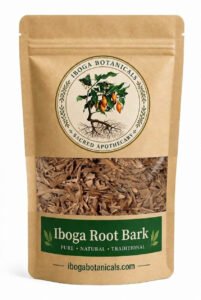
| Raw Root Bark / Shavings | ~2% to 6% total alkaloids | Ethnobotanical reference, traditional study, raw extraction | Coarse, fibrous wood shavings; intense yellow inner tissue |
| Milled Root Bark Powder | ~5% to 7% total alkaloids | Uniform botanical analysis, chemical extraction prototyping | Fine, yellowish-brown micro-milled powder |
| Total Alkaloid (TA) Extract | ~40% to 60% total alkaloids | Spectrum analysis, comparative pharmacological research | Dense, uniform, brown-to-amber crystalline resin |
| Purified Total Alkaloid (PTA) | ~70% to 85% total alkaloids | Specialized dosing studies, advanced isolate preparation | Tan, semi-crystalline powder or highly refined paste |
| Ibogaine Hydrochloride (HCl) | ~95% to 99%+ pure isolate [1, 2] | Clinical addiction research, precise chemical mapping [1, 2] | Bright white to off-white micro-crystalline salts |
Detail Profile of Each Variation
1. Raw Root Bark and Shavings
This is the most fundamental, unrefined form of the plant. It is created by carefully scraping the thin, yellowish inner layer off the mature roots of the Tabernanthe iboga shrub, leaving the dense inner woody core untouched. The shavings are then thoroughly sun-dried under climate-controlled conditions to eliminate moisture and prevent mold.
-
- Identification: High-quality raw bark should display an intense, deep yellow inner tissue layer and be completely free of dirt, stone, or external jungle debris.
2. Milled Root Bark Powder
This form is created by taking the dried raw root bark shavings and running them through high-speed, industrial milling equipment. The result is a highly uniform, finely ground powder.
-
- Why it’s used: Powdering the bark creates a perfectly consistent material, which is absolutely necessary for laboratory extractions or when researchers need to guarantee an equal distribution of alkaloids across multiple research samples. Legitimate suppliers never use cheap wood fillers or outer tree bark to bulk up the weight.
3. Total Alkaloid (TA) Extract
TA extract represents the first major layer of chemical refinement. Using natural, organic solvents, chemists extract the entire alkaloid matrix directly out of the root bark powder, leaving behind all the raw wood fibers, plant cellulose, and plant sugars.
-
- Characteristics: High-quality TA is completely uniform and free of fibrous layers. Because it contains all 12+ alkaloids in their natural, unbroken ratios, it is heavily favored by researchers studying the “entourage effect”—the theory that the plant’s secondary compounds naturally smooth out and enhance the performance of the primary alkaloid, ibogaine.
4. Purified Total Alkaloid (PTA) Extract
PTA is a highly advanced, further refined iteration of the TA extract. Through secondary washing and filtration processes, the dark resins and plant fats are stripped away from the TA matrix, leaving behind a highly concentrated, clean, tan-colored powder or paste. It bridges the gap between a full-spectrum natural extract and a purely isolated chemical salt.
5. Ibogaine Hydrochloride (HCl)
Ibogaine HCl is a highly purified, single-compound isolated chemical crystal [1, 2]. It is created by extracting ibogaine out of the botanical matrix and converting it into a water-soluble hydrochloride salt form.
-
- Purity Standards: For clinical research and precise laboratory testing, the material must hit an elite purity threshold of 95% to 99%+. Because it is completely isolated, it allows medical researchers to calculate exact, hyper-precise milligrams of dosing based strictly on a subject’s body weight, eliminating the natural dosage volatility found in raw plant barks.
5. Cultivation, Sustainability, and Ethical Sourcing Realities
Because of the massive, exploding global interest in ibogaine for addiction treatment, Tabernanthe iboga is currently facing a catastrophic ecological crisis. True understanding of this market requires an honest look at sustainability and ethical sourcing.
The Threat of Wild Poaching and Overharvesting
Tabernanthe iboga is a highly sensitive, slow-growing plant. To harvest the root bark, the tree must be completely dug up, which effectively kills or severely damages the organism. Furthermore, a tree must grow for a minimum of 10 to 15 years before its root bark reaches the maturity required to manifest a high concentration of therapeutic alkaloids.
Driven by high profit margins from desperate Western buyers, illegal poachers have spent the last two decades stripping wild iboga out of the protected national forests of Gabon and Cameroon. This rampant overharvesting has pushed the wild species close to ecological depletion, severely threatening local jungle ecosystems and depriving indigenous communities of their native cultural heritage.
Legislative Protections: The 2019 Nagoya Protocol and Export Bans
To halt this environmental destruction, African nations took historic legal action. In 2019, the government of Gabon enacted strict, comprehensive conservation laws aligned with the international Nagoya Protocol.
-
- The Law: It is now entirely illegal to export wild Tabernanthe iboga out of Gabon without exceptionally rare, highly regulated, state-issued governmental permits.
- The Impact: Legitimate international buyers and researchers must completely avoid any vendors offering “wild-harvested Gabonese iboga,” as these materials are almost always the product of illegal poaching, black-market smuggling, and eco-terrorism.
The Path Forward: Managed Cultivation and Reforestation
The only ethical, legal, and sustainable way to source iboga today is through dedicated, fair-trade managed cultivation systems.
-
- Generational Farming Partnerships: Ethical sourcing relies on working directly with established, generational farming families in countries like Cameroon, who cultivate the plant legally on private, dedicated agricultural land.
- Mandatory Reforestation Ratios: Sustainable operations practice strict economic and environmental reciprocity. For every single mature plant harvested on their land, farms must systematically replant fresh seeds or cuttings to actively preserve and expand the agricultural ecosystem.
- Lab Verification (Certificates of Analysis): To guarantee that no cheap wood fillers or unverified wild materials are mixed into the inventory, every batch must be independently third-party tested. A verifiable Certificate of Analysis (CoA) using High-Performance Liquid Chromatography (HPLC) should be provided to confirm the exact species taxonomy, purity, and precise alkaloid percentages.
6. Clinical Application, Medical Safety, and the “Flood Dose” Protocol
While ibogaine has shown unprecedented success rates in interrupting severe substance dependency, it is fundamentally a highly cardiotoxic substance. It is not a gentle supplement or a casual home remedy; it is an intense, physically grueling pharmaceutical intervention that demands absolute clinical precision.
The Cardiotoxicity Reality: QT Prolongation
The single greatest physiological danger of ibogaine revolves around its impact on the human heart’s electrical system. Ibogaine acts as a potent blocker of the hERG channels (human Ether-à-go-go-Related Gene) in the heart.
-
- The Medical Crisis: When these channels are blocked, the heart’s electrical repolarization phase is delayed. On an electrocardiogram (ECG), this manifests as QT Interval Prolongation.
- The Worst-Case Scenario: If the QT interval is prolonged past safe limits, it can trigger a sudden, catastrophic, and often fatal cardiac arrhythmia known as Torsades de Pointes (a rapid, polymorphic ventricular tachycardia). If left unmonitored and untreated with advanced medical equipment, this arrhythmia leads directly to cardiac arrest and death.
Because of this severe, undeniable risk, an absolute medical consensus exists worldwide: Ibogaine should never, under any circumstances, be ingested in therapeutic doses outside a fully equipped, professional clinical environment.
Strict Pre-Screening Protocols
To prevent cardiac fatalities, legitimate medical ibogaine clinics execute extensive, non-negotiable pre-screening protocols weeks before a patient ever touches the substance:
-
- 12-Lead Electrocardiogram (ECG): A comprehensive reading of the heart’s resting rhythm. Any individual presenting a baseline prolonged QTc interval (typically over 450ms for men or 460ms for women), bundle branch blocks, or structural heart abnormalities is strictly disqualified from treatment.
- Stress Testing & Echocardiogram: Used to verify the structural integrity of the heart chambers and valves, ensuring the cardiovascular system can handle the intense physical stress of a multi-hour experience.
- Full Liver and Kidney Panels: Ibogaine is metabolized primarily by the liver’s CYP2D6 enzyme path. If a patient is a poor CYP2D6 metabolizer, or has compromised liver/kidney function, the drug will build up to toxic levels in their bloodstream, drastically increasing the window of cardiac danger.
- Electrolyte Stabilization: Low levels of potassium or magnesium drastically compound the cardiotoxicity of ibogaine. Clinics must test and aggressively supplement these minerals to ensure pristine electrolyte balance before administration.
The “Flood Dose” Experience and Continuous Monitoring
A therapeutic dose designed for complete chemical detoxification is known as a “flood dose” because it completely saturates the brain’s neuroreceptors. The dosage is calculated based strictly on a person’s body weight and metabolic profile.
During a flood dose treatment, which typically lasts anywhere from 24 to 36 hours, the clinical setting must maintain:
-
- Continuous ECG Monitoring: The patient must be hooked up to automated, real-time cardiac monitors throughout the entire duration of the experience, allowing medical teams to track every single heartbeat.
- Emergency Preparedness: The room must be stocked with advanced emergency medical hardware, including an Automated External Defibrillator (AED), supplemental oxygen, and intravenous cardiac anti-arrhythmic medications (such as magnesium sulfate infusion pumps).
- Critical Drug Interactions: Ibogaine interacts catastrophically with a massive list of common substances. Methadone, suboxone, common antidepressants (SSRIs), antipsychotics, and even simple things like grapefruit juice can delay ibogaine clearance or exacerbate QT prolongation. Patients must undergo strict, carefully managed taper and washout periods under clinical eye before their flood session.
7. Global Regulation, Legal Status, and International Logistics
Navigating the acquisition, possession, and transport of Tabernanthe iboga and its extracts requires strict adherence to a highly complex, fragmented web of international laws and customs regulations. Because it is a highly restricted substance, cutting corners can lead to heavy criminal penalties and severe border customs seizures.
The Legality Matrix
The legal status of iboga and ibogaine varies drastically from one border to the next:
-
- The United States: Classifies ibogaine as a Schedule I Controlled Substance. By law, it is viewed as having a high potential for abuse, no accepted medical value, and a complete lack of safety under medical supervision. Possession, import, manufacturing, or distribution carries severe federal criminal charges.
- The United Kingdom: Regulates the material under the Psychoactive Substances Act, making it illegal to import, manufacture, or supply the substance without highly specialized medical licensing.
- Canada: Lists ibogaine on the Prescription Drug List. This means it is highly regulated but can be legally imported and administered by licensed medical practitioners within controlled settings, though unauthorized consumer importing remains illegal.
- New Zealand and South Africa: Have established progressive, formal medical frameworks. They classify ibogaine as a prescription-only medicine, allowing licensed doctors to prescribe and utilize it for specialized clinical addiction treatments under official state monitoring.
- Legal Gray Zones: In countries like Mexico, Costa Rica, and various European nations, ibogaine sits in an unregulated gray zone—it is not explicitly approved as a medicine, but it is not classified as an illegal controlled drug. This has allowed dozens of international ibogaine recovery centers to establish open, legal clinical operations within their borders.
Navigating International Logistics and Customs Clearance
For legitimate global researchers, herbaria, and licensed collectors, shipping these sensitive African botanicals across international borders requires impeccable logistics execution. Customs border agencies view these shipments with intense scrutiny.
To guarantee successful, seamless delivery to global doorsteps with zero customs holds or border delays, shippers must execute the following protocol:
-
- Perfect Flawless Documentation: Every international shipment leaving Central Africa must be backed by accurate customs declarations, formal commercial invoices, verified laboratory Certificates of Analysis (CoA), and official phytosanitary certificates issued by the exporting country’s department of agriculture. This completely eliminates unnecessary bureaucratic bottlenecks.
- Heavy-Duty, Airtight Packaging: The material must be securely vacuum-sealed inside robust, moisture-proof barrier wrapping or placed inside industrial-grade glass vials cushioned within heavy-duty boxes. This guarantees the delicate wood shavings or crystalline extracts are perfectly protected against flight humidity and temperature fluctuations during international transit.
- Absolute Privacy and Discretion: Legitimate international logistics providers understand the absolute importance of corporate and personal security. Therefore, all external packaging must be completely plain, unmarked, and neutral. There should be absolutely no mention of “Iboga,” “Ibogaine,” “Apothecary,” or botanical keywords on the outside of the box, ensuring complete anonymity and secure, untampered movement through international freight networks.
- Premium Priority Couriers: Shipments should be dispatched exclusively via top-tier, international priority express couriers. This provides global buyers with real-time tracking metrics and automated customs updates from the moment the package leaves the African continent directly to its final destination.
Summary: A Powerful Plant Demanding Supreme Respect
Tabernanthe iboga is one of the most unique, powerful, and scientifically fascinating botanical specimens on Earth. Whether viewed as a sacred spiritual master teacher by the guardians of the Bwiti tradition, or analyzed as a revolutionary multi-targeted neurochemical reset tool by Western clinical researchers, it demands absolute respect.
From its slow, 15-year growth cycle in the soils of the Congo Basin to its critical cardiotoxicity risks and highly complex global legal landscapes, there are no shortcuts. Safely unlocking its immense potential requires a permanent commitment to ethical managed cultivation, rigorous medical screening, and absolute compliance with international laws.