Where to Buy Iboga Extract Online: A Guide to Quality, Safety, and Choosing a Reliable Source
Introduction
Interest in iboga extract has grown considerably as more people learn about the traditional uses of Tabernanthe iboga, a plant native to Central and West Africa. Traditionally valued by several communities in Central Africa, particularly in Gabon, iboga has a longstanding cultural and ceremonial significance.
Today, iboga is attracting international attention because of its complex botanical composition and the growing scientific interest in ibogaine, one of its naturally occurring alkaloids.
As interest increases, so does the number of online searches for where to buy iboga extract online. Consumers researching botanical products want to understand where iboga comes from, how extracts are produced, how product quality is evaluated, and whether suppliers provide reliable information.
However, buying iboga extract requires particular caution. Products sold online may differ significantly in composition, potency, purity, and safety. Furthermore, ibogaine-containing preparations have been associated with potentially fatal cardiac complications.
This guide explores what consumers should know about iboga extract, how to evaluate supplier transparency, and why safety and legal compliance should take priority over price or marketing claims.
1. Understanding Iboga Extract and Its Botanical Origins
Before researching where to buy iboga extract online, it is important to understand the plant itself.
Iboga, scientifically known as Tabernanthe iboga, is a perennial shrub indigenous to Central African rainforests. Its root bark contains several naturally occurring alkaloids, including ibogaine, ibogaline, and tabernanthine.
The plant has traditionally been associated with spiritual practices, cultural ceremonies, and traditional knowledge systems in parts of Central Africa.
Iboga extract refers to a concentrated preparation derived from the plant. Depending on the manufacturing process, an extract may contain different concentrations and combinations of naturally occurring compounds.
Different forms of iboga products
Products marketed as iboga may include:
- Iboga root bark: The dried botanical material obtained from the plant’s roots.
- Iboga powder: Ground botanical material that retains a mixture of plant constituents.
- Iboga extract: A concentrated botanical preparation produced through extraction processes.
- Ibogaine: A specific alkaloid naturally present in the plant.
- Standardized extracts: Preparations manufactured to contain a specified concentration of selected compounds.
These products are not interchangeable. Their chemical compositions and potential risks can vary substantially.
Consumers should be cautious of sellers who use terms such as pure, natural, pharmaceutical-grade, or full-spectrum without supporting laboratory documentation.
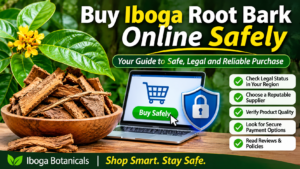
2. Where to Buy Iboga Extract Online: What Consumers Should Know
Searching for iboga extract online can produce numerous websites claiming to offer authentic African botanical products.
However, an attractive website, professional packaging, or positive customer testimonials do not establish that a product is genuine, accurately labelled, or safe.
We do not recommend purchasing or consuming iboga extract from unverified online vendors. There is currently no universally recognized consumer certification that establishes an online iboga extract as medically safe.
Instead, anyone researching a supplier should understand the following considerations.
Supplier transparency
A responsible botanical supplier should provide clear information about its business identity, product origin, manufacturing practices, and regulatory compliance.
Important questions include:
- Can the business be independently identified and contacted?
- Does it disclose the botanical identity of its products?
- Can it explain where the plant material originates?
- Does it provide independently verifiable quality documentation?
- Does it clearly explain the legal status of the products in relevant markets?
A supplier that avoids basic questions about its products should be treated cautiously.
Independent laboratory testing
Laboratory testing is important for understanding the chemical composition and potential contamination of botanical preparations.
A certificate of analysis (COA) may provide information about:
- Botanical identity.
- Chemical composition.
- Alkaloid content.
- Heavy metal contamination.
- Microbial contamination.
- Pesticide residues.
- Batch identification.
Consumers should understand that a laboratory certificate does not automatically establish medical safety.
Even a product with accurately measured alkaloid concentrations can carry serious health risks.
Transparent product labelling
Product descriptions should distinguish between whole-plant material, concentrated extracts, and isolated alkaloids.
A credible product description should not make unsupported claims about treating addiction, eliminating withdrawal symptoms, curing depression, or providing guaranteed therapeutic outcomes.
3. Why Iboga Extract Quality and Purity Matter
Botanical products are not always chemically identical.
The concentration of naturally occurring compounds in Tabernanthe iboga may vary depending on plant characteristics, growing conditions, harvesting, processing, and storage.
Extraction methods can also influence the final chemical composition.
This makes product characterization particularly important.
Potential quality concerns
Poorly characterized botanical preparations may present several concerns:
Inconsistent alkaloid concentrations: Two products carrying the same label may contain substantially different chemical compositions.
Contamination: Poor harvesting, processing, or storage practices may introduce unwanted substances.
Mislabelled products: Some products may not contain the botanical ingredients advertised.
Unverified purity claims: Marketing language such as 100% pure does not establish the absence of contaminants or harmful constituents.
The Dutch National Institute for Public Health and the Environment (RIVM) published a risk assessment in 2024 advising consumers not to use herbal preparations containing Tabernanthe iboga because of their potential health risks.
This highlights why product quality alone cannot guarantee safety.
4. Understanding the Health Risks of Iboga Extract
One of the most important considerations when researching iboga extract is its potential effect on cardiovascular health.
Ibogaine, a naturally occurring alkaloid in iboga, has been investigated for its possible role in substance-use disorder research.
However, its safety profile raises significant concerns.
Cardiac complications
Ibogaine can prolong the QT interval, an electrical measurement associated with the heart’s rhythm.
Significant QT prolongation can increase the risk of dangerous ventricular arrhythmias, including torsades de pointes.
In severe cases, these complications can be fatal.
A systematic review published in 2021 identified cardiac complications among the most frequently reported serious adverse events associated with ibogaine.
Neurological and psychological effects
Reported adverse effects include:
- Tremors.
- Impaired coordination.
- Nausea and vomiting.
- Changes in perception.
- Confusion.
- Hallucinations.
- Psychiatric complications.
Some effects may persist beyond the initial period of exposure.
Medication interactions
Ibogaine may interact with medications and other substances, potentially increasing the risk of serious complications.
This is particularly important for individuals taking medications that affect cardiac rhythm or have other cardiovascular effects.
Medical screening and professional oversight are essential considerations in any legitimate clinical investigation involving ibogaine.
Important: Online purchasing, product testing, and supplier assurances cannot replace medical assessment or establish that an iboga preparation is safe to consume.
5. Is It Legal to Buy Iboga Extract Online?
The legal status of iboga and ibogaine varies significantly between countries.
Some jurisdictions regulate ibogaine as a controlled substance, while others apply different restrictions to the plant, its extracts, or specific alkaloids.
In other locations, the legal position may be unclear or subject to changing regulations.
Before considering any transaction, consumers should verify:
- Whether iboga is legally permitted in their country.
- Whether ibogaine is classified as a controlled substance.
- Whether botanical extracts require special authorization.
- Whether importation and exportation are permitted.
- Whether the seller has the necessary business and product authorizations.
For international customers, it is especially important to understand customs requirements and applicable import restrictions.
A website accepting international orders does not mean that the product can legally enter your country.
For example, the United States regulates ibogaine differently from some other countries. In the European Union, regulatory treatment of ibogaine-containing products also requires careful consideration.
Never assume that a product is legal simply because it is advertised online.
6. Can Iboga Extract Be Used for Addiction Treatment?
Ibogaine has attracted scientific attention because of preliminary findings involving substance-use disorders, particularly opioid dependence.
Some observational studies have reported reductions in withdrawal symptoms and cravings.
However, the available evidence remains limited, and ibogaine is not an established replacement for evidence-based addiction treatment.
Research also identifies substantial safety concerns, particularly cardiac complications.
A 2026 clinical review published in the journal Addiction highlighted the risk of QT prolongation and potentially fatal ventricular arrhythmias associated with ibogaine.
The US Food and Drug Administration also published information in October 2026 outlining its efforts to support ibogaine research while emphasizing the need for appropriate clinical safeguards.
People experiencing substance-use disorders should consult qualified healthcare professionals about established treatment options, including medically supervised withdrawal management and evidence-based medications.
Ibogaine should not be treated as a proven or risk-free addiction treatment.
7. How to Identify Misleading Iboga Extract Marketing
The increasing popularity of iboga-related products has created opportunities for misleading advertising.
Consumers should be cautious when encountering websites that make claims such as:
- Guaranteed addiction recovery.
- Completely risk-free iboga treatment.
- Pharmaceutical purity without independent evidence.
- Guaranteed withdrawal relief.
- No medical screening required.
- Safe for everyone.
- Instant results from a single treatment.
These statements should raise concerns.
A responsible botanical business should prioritize accurate product descriptions, transparent sourcing, regulatory compliance, and honest communication about limitations and risks.
Trustworthy health-related information should never depend solely on customer reviews or promotional testimonials.
8. Questions to Ask Before Trusting an Online Iboga Supplier
Before relying on information from an online supplier, consider the following questions:
1. What is the exact botanical identity?
Does the supplier identify the plant as Tabernanthe iboga?
2. Is the product composition documented?
Are there independently verifiable laboratory reports identifying its chemical constituents?
3. Is the product traceable?
Can the business explain the botanical origin and supply chain?
4. Are legal requirements addressed?
Does the supplier provide accurate information about applicable regulations?
5. Are health claims supported by scientific evidence?
Does the business avoid unsupported claims about addiction treatment or medical benefits?
6. Does the supplier communicate potential risks?
A business that discusses only benefits while ignoring documented risks is not providing balanced consumer information.
9. Making Informed Decisions About Iboga Botanical Products
Interest in traditional African botanical knowledge continues to grow internationally.
Iboga is an important part of this heritage, and responsible discussion of the plant should recognize both its cultural significance and the scientific questions surrounding its chemical constituents.
For consumers researching iboga products, informed decision-making begins with understanding the difference between traditional botanical materials, concentrated extracts, and isolated alkaloids.
It also requires recognizing that natural origin does not automatically mean safety.
Businesses operating in the botanical sector have an important responsibility to provide accurate information, maintain transparent supply chains, and avoid exaggerated health claims.
At Iboga Botanicals, educational information about iboga should be approached with respect for its African origins, scientific accuracy, and a commitment to consumer awareness.
Conclusion: Where to Buy Iboga Extract Online Safely
Finding information about where to buy iboga extract online is relatively easy. Identifying a product that is authentic, legally compliant, accurately characterized, and safe is considerably more complicated.
There is no reliable online purchasing shortcut that removes the health risks associated with iboga and ibogaine.
Consumers should prioritize independently verifiable product information, legal compliance, transparent sourcing, and professional medical advice rather than relying on promotional claims.
Iboga deserves responsible attention as an important African botanical with a long cultural history and an emerging scientific research profile.
The most informed approach is one that respects its origins while placing safety, transparency, and scientific evidence first.
Frequently Asked Questions (FAQs)
1. Where can I buy iboga extract online?
There is no universally verified online marketplace that guarantees the safety, authenticity, and legal status of iboga extract. Consumers should avoid unverified vendors and seek authoritative information about applicable regulations and health risks before considering any product.
2. What is the difference between iboga powder and iboga extract?
Iboga powder generally refers to ground botanical material, while iboga extract is a concentrated preparation produced through extraction processes. Their chemical compositions and concentrations may differ considerably.
3. Is pure iboga extract safe?
Purity does not establish safety. Iboga preparations may contain ibogaine, which has been associated with potentially dangerous cardiac complications, including QT prolongation and life-threatening arrhythmias.
4. Does iboga extract contain ibogaine?
Many iboga preparations naturally contain ibogaine, although the concentration varies depending on the plant material and processing methods. Laboratory analysis is necessary to establish the chemical composition of a particular preparation.
5. Is iboga extract legal internationally?
No. Legal restrictions differ between countries and may apply differently to the plant, extracts, and isolated ibogaine. Always consult the relevant national regulatory authorities.
6. Can iboga extract help with addiction?
Ibogaine is being investigated for potential applications in addiction research. However, evidence remains limited, and serious safety concerns prevent it from being considered an established or risk-free treatment.
7. How can I verify the quality of iboga extract?
Independent laboratory documentation may help establish botanical identity, chemical composition, and contamination levels. However, laboratory testing cannot establish that an iboga preparation is medically safe.
8. What should I know before researching iboga products?
Understand the botanical origins, chemical composition, regulatory status, potential health risks, and limitations of existing scientific research. Consult a qualified healthcare professional before considering exposure to iboga or ibogaine.
References and Further Reading
- Ona, G., et al. (2021). The adverse events of ibogaine in humans: An updated systematic review of the literature (2015–2020). PubMed. https://pubmed.ncbi.nlm.nih.gov/34406452/
- National Institute for Public Health and the Environment (RIVM). (2024). Risk assessment of herbal preparations containing Tabernanthe iboga. https://www.rivm.nl/publicaties/risk-assessment-of-herbal-preparations-containing-tabernanthe-iboga
- Cherian, K., et al. (2024). Psychedelic Therapy: A Primer for Primary Care Clinicians—Ibogaine. American Journal of Therapeutics. https://pubmed.ncbi.nlm.nih.gov/38518270/
- Brunt, T. M. (2026). Rare but relevant: Ibogaine and cardiovascular complications—prolonged QT interval and ventricular arrhythmias. Addiction. https://doi.org/10.1111/add.70319
- US Food and Drug Administration (2026). FDA Seeks Public Input to Support Ibogaine Research. https://www.fda.gov/news-events/press-announcements/fda-seeks-public-input-support-ibogaine-research
[…] different iboga preparations vary […]